What Is a DAC: How It Works and Why It Matters for Your Audio
Every digital audio source requires analog conversion for acoustic output. The Digital-to-Analog Converter (DAC) handles this critical task by transforming binary data (ones and zeros, or in other words, music files) into the usable analog waveform for your speakers or headphones.
Devices usually come with a DAC built-in, designed for convenience and efficiency. They meet the needs of most everyday users. However, if your expectations go beyond casual listening, understanding when to upgrade to an external unit can improve your experience. This guide provides the complete functional breakdown of DACs. Let's begin the technical overview.
DAC Fundamentals: Definition and Necessity in Digital Audio
Understanding of the DAC converter begins with how modern audio is stored. Music resides as digital files; but there has to be some ways for digital files to be converted to sounds that people hear, this is where DAC comes in.
Definition and Function
A DAC takes digital audio data and translates it into the electrical signals required to drive speakers in order to produce sound. From smartphones, laptops, to personal computers, most, if not all, digital playback devices contain one.
Why The Conversion Is Necessary?
Headphone drivers require analog voltage to move their diaphragms and produce sound. Digital streams (Spotify, YouTube) or downloaded files remain digital information until conversion occurs. Without the critical step of converting digital information to soundwaves, the music library is useless; you would have silence.
How Does A DAC Work?
Modern DACs reconstruct the original analog waveform from the digital audio data, then filter out unwanted noise.
Pulse Code Modulation (PCM) for Input
Most digital audio employs PCM encoding. Each sample captures amplitude at a specific moment as a binary number. A 16-bit PCM system represents 65,536 possible voltage levels; 24-bit extends this to over 16 million. Higher bit depths enable finer gradations between loud and soft passages.
Key DAC Architectures and Operation
Two main design approaches dominate consumer products, each with distinct characteristics:
-
R-2R Ladder DAC: This design uses the short path from digital to analogue. The approach is instantaneous but demands extremely precise manufacturing; tiny variations affect accuracy. There are audiophiles who prefer the sound character of these, often describing them as more natural or immediate.
-
Delta-Sigma (ΔΣ) DAC: This design processes the digital signal multiple times at very high speeds before creating the final analogue output. It is more tolerant of component variations while achieving excellent accuracy and low noise. From smartphones to high-end DACs, the vast majority of devices use this design due to its consistent, reliable performance across price points.
The Reconstruction Filter for Output
Raw DAC output contains high-frequency artefacts generated by sampling. Filters remove these unwanted components above the audible range, leaving only the intended audio. Sound quality unpacked shows that filter design impacts the character of sound: some prioritize extended treble response, others optimize for smooth transient behavior. Quality filters preserve musical detail while eliminating noise.
What Key Specifications Determine DAC Performance?
Performance metrics define a DAC's ceiling. Below are the key specs to consider, while the sonic results depend on execution.
1. Resolution (Bits)
Dictates dynamic range, the span from silence to peak output. 16-bit handles CD standard; 24-bit covers hi-res audio. Higher bit depth means less noise floor and improved detail in quiet passages.
2. Sampling Rate (kHz)
Sets the maximum frequency response. 44.1 kHz is the CD standard; hi-res uses 96 kHz+. While higher rates offer technical headroom, few can discern differences above 48 kHz in controlled testing.
3. Signal-to-Noise Ratio (SNR) and Dynamic Range
Quantifies background noise. Target 100 dB minimum; 110 dB ensures total silence even during the quietest tracks. Poor SNR introduces hiss, masking subtle musical elements.
4. Total Harmonic Distortion Plus Noise (THD+N)
Measures artifacts generated during conversion. Aim below 0.01% for clean output; below 0.001% is exceptional. High distortion adds harshness or lack of clarity.
5. Jitter and Clock Management
Defines sample timing accuracy. Jitter (clock variance) degrades clarity by creating sidebands. Quality DAC circuits isolate this using precision oscillators (femtosecond-level) and buffering to stabilize the digital signal from noisy inputs.
Types of DAC and Diverse Applications
Digital-to-Analog Converters manifest in several distinct form factors, each tailored to specific requirements, from portability to ultimate desktop fidelity.
Integrated DACs (Codec Chips) in Consumer Electronics
Every consumer device, your smartphone, laptop, and tablet, is equipped with an Integrated DAC (Codec Chip). The engineering priority here is rarely sound quality; it is power efficiency and minimizing manufacturing cost. Modern codec chips offer adequate performance for casual listening.
When it comes to wireless headphones, the integration goes a step further. DAC and amplifier are typically built into a single audio SoC (System-on-Chip) that also handles Bluetooth communication and power management. This compact design not only enables smooth and high-quality sound but also keeps the headphones light and power-friendly.
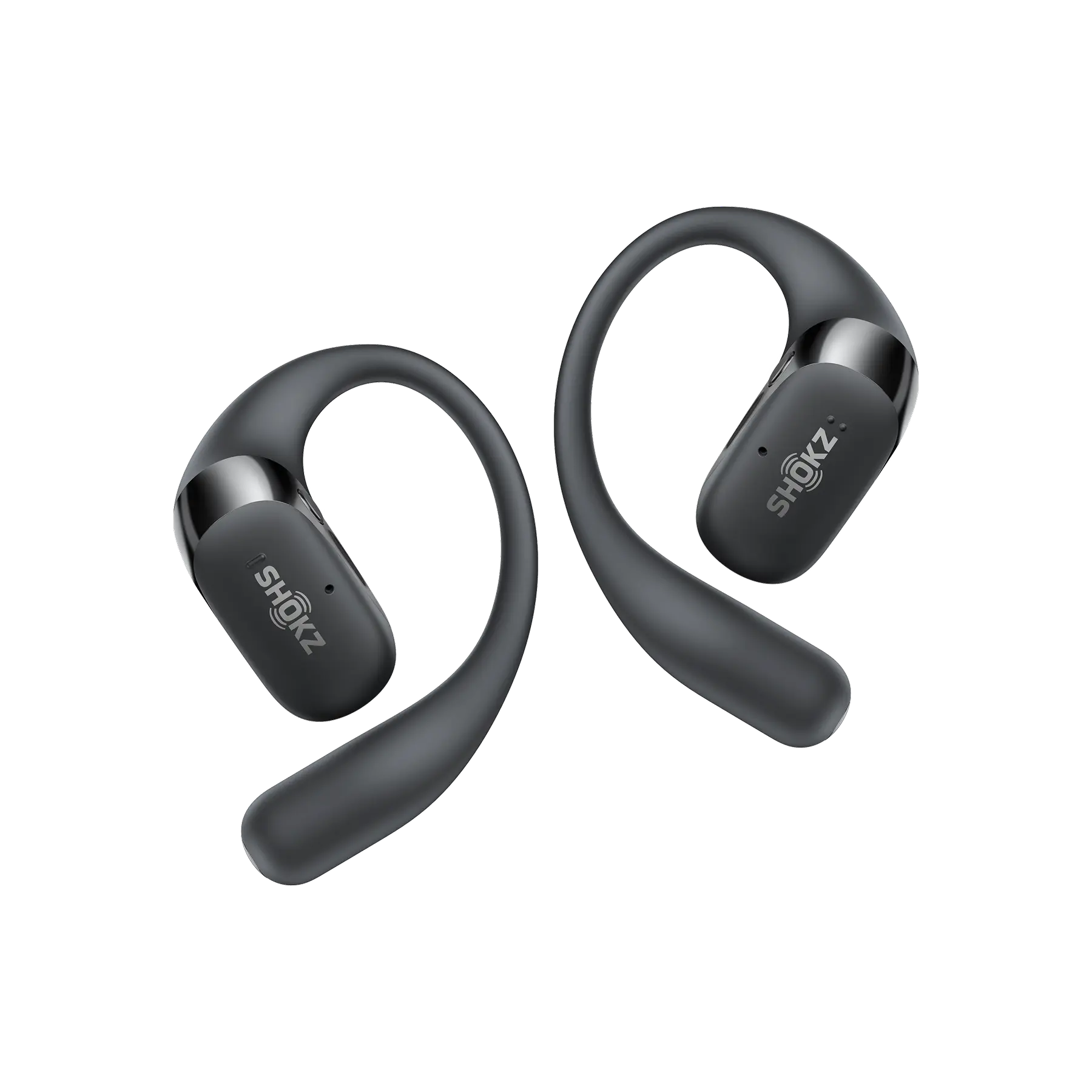
Models like OpenFit 2+ and OpenRun Pro 2 are good examples of this design. Their highly integrated chipsets make them easy to take on the go. These headphones also bring long playtime without bulky hardware, so they are ideal for daily use and on-the-go listening.
Standalone / External DACs for Hi-Fi and Audiophile Systems
For dedicated home listening, Standalone/External DACs are the standard. These desktop units connect to your primary digital source (PC or streamer) and feed the converted signal to your amplifier or powered speakers. Their core benefit is complete isolation, bypassing the inherent noise and component compromises of the source device. This results in audibly superior clarity, separation, and dynamic range, a necessity for serious audiophile systems.
Portable USB DAC/Amps (Dongle DACs)
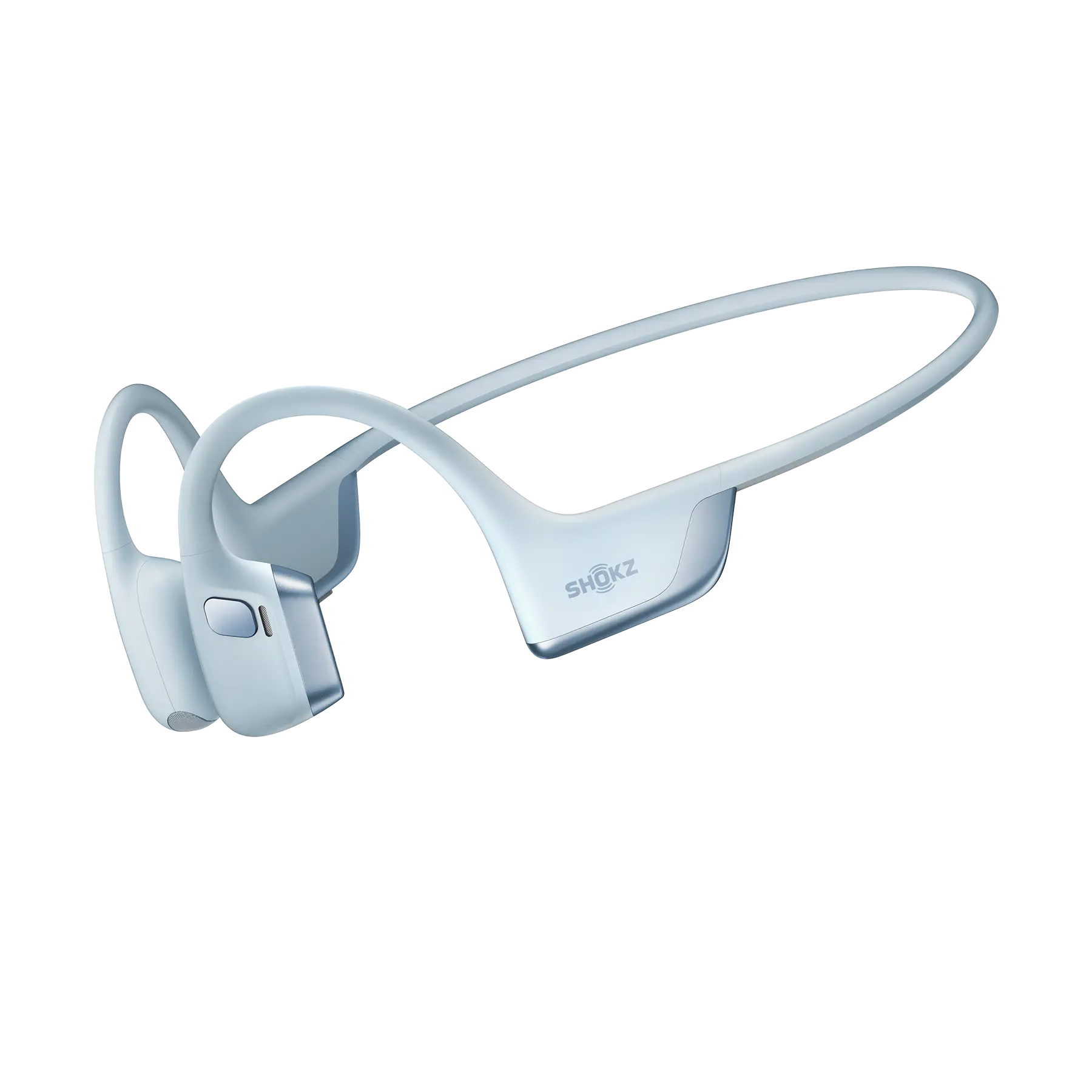
Portable USB DAC/Amps, or 'Dongle DACs,' are pocket-sized problem solvers. They connect directly to your phone's USB port to power headphones. These units help provide enough current for demanding, high-impedance models and improve on often inferior internal converters that introduce distortion. They are particularly useful if you use open ear headphones, ensuring better sound clarity and detail.
How Does a Quality DAC Influences Sound?
Superior converters do not introduce elements; they minimize information loss during translation.
Clarity and Detail Retrieval
High-quality implementations preserve subtle recording elements often lost in cheaper circuits. Instrument textures clarify, background vocals remain distinct, and cymbal decay extends naturally. This effect is not added detail—it is the prevention of degradation that typically masks existing information in the recording.
Soundstaging and Imaging
Quality conversion accurately maintains the spatial cues encoded in stereo recordings. Instruments occupy distinct positions within the soundstage, preventing the presentation from collapsing toward the center. Listeners perceive accurate depth and width, placing musicians in three-dimensional space. Inferior converters flatten this presentation, resulting in a compressed sound.
Transient Response and Bass Control
Conversion precision directly impacts musical attack. Drum hits must resolve cleanly; piano notes must bloom without overshoot or ringing. Bass lines retain definition and texture, avoiding a monotonous thump. These qualities demand accurate, distortion-free conversion that avoids smearing fast musical events.
FAQ
1. Can a DAC improve sound quality?
Yes, but only if your current setup exhibits audible faults, background hiss, harsh treble, muddy bass, or insufficient headphone volume. Using shokz open earbuds may help reduce some of these issues. If the source is already clean and detailed, gains will be marginal. Focus on addressing existing problems, not chasing theoretical upgrades.
2. Do I need a DAC for my record player?
No. Turntables output analogue signals that route directly to phono preamps and amplifiers; no digital conversion is involved. A DAC is only necessary if you are playing back digital recordings derived from your vinyl collection.
3. Do all CD players have a DAC?
Yes. CDs store digital audio; therefore, every player must convert the signal to analogue before output. While the functional necessity is universal, the quality varies significantly by model and price point.
4. What are the benefits of using a DAC?
External converters achieve multiple advantages: they bypass inferior built-in circuits, support higher resolution formats, reduce electrical noise via physical separation, and often integrate superior headphone amplifiers.
Conclusion
This article explained how DAC works and why it matters for sound quality. You learned about different types, key specs, and when upgrading might help. With this knowledge, you can better understand your audio gear and enjoy clearer, more detailed sound.
Author Information

guides on Shokz
Related Posts