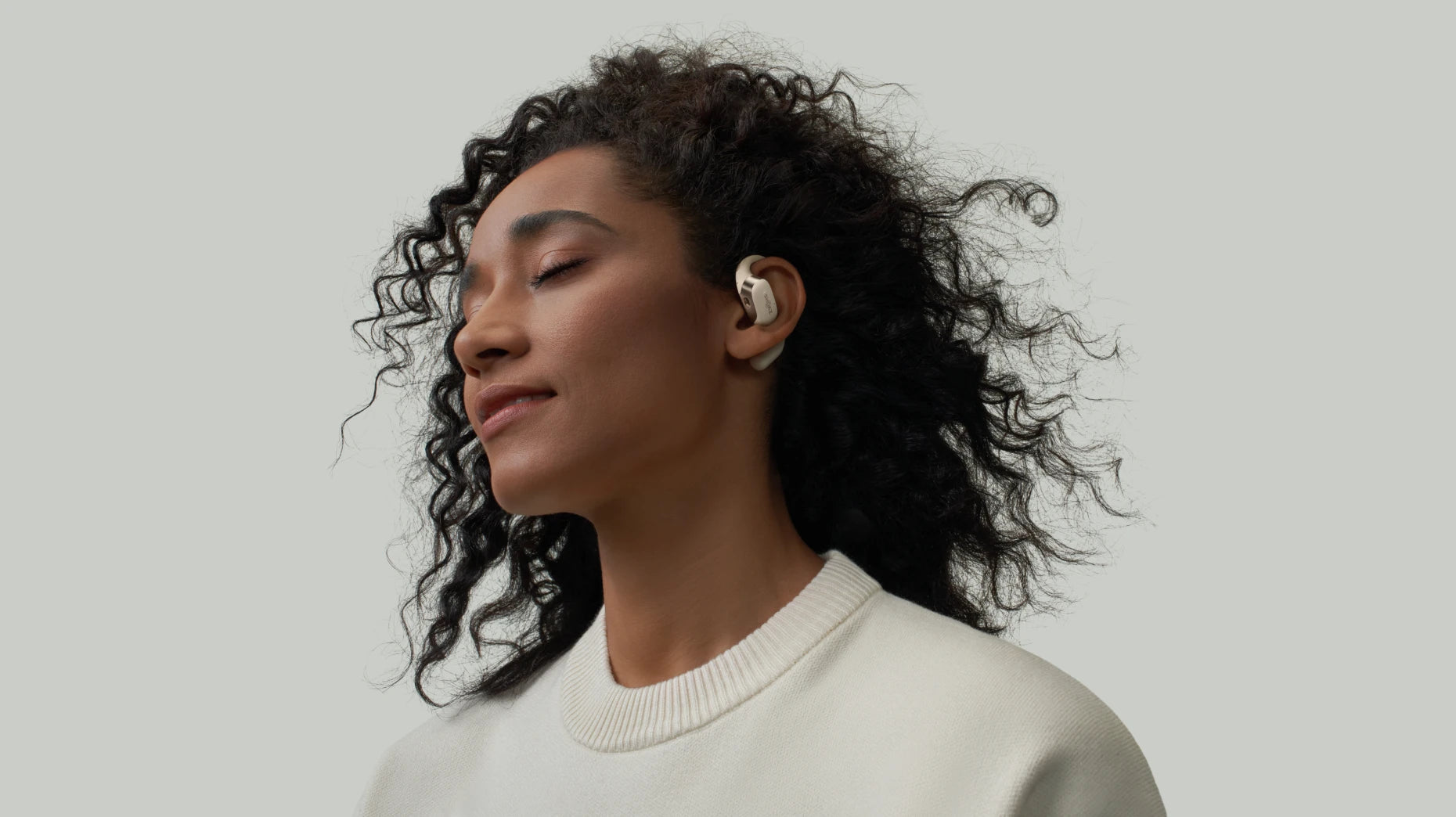
Tired of Heavy Earbuds? Discover Lightweight Ear Clips Built for All-Day Wear
Seeing ads for lightweight, clip-on earbuds might leave you wondering if they’re a genuine solution or just another passing audio trend. The reality? They aren't a mandatory upgrade for everyone.
However, they can provide massive physical relief if your current setup is frustrating to wear. If your ear canals ache after back-to-back calls, your buds constantly slip out on the treadmill, or you hate that pressurized "underwater" sensation, this design might actually be the fix you need. Let's look at what they actually do—and where they fall short.
What Lightweight Ear Clip Earbuds Actually Are (And What They’re Not)
Lightweight ear clip earbuds are open-ear, clip-on devices that rest around the outer ear rather than sealing tightly inside the ear canal. That distinction matters far more than the “lightweight” marketing label. This product category is engineered for comfort, stability, and environmental awareness—not for blocking the outside world out.
The Core Engineering Trade-Off: Open-Ear Clip vs. In-Ear Seal
Standard in-ear buds usually rely on a tight ear canal seal to stay put. While this boosts bass response and isolation, it can also cause that uncomfortable, plugged-up feeling and often slips out when you talk or work up a sweat.
Clip-on earbuds take the opposite approach. By anchoring securely to the outer ear, they leave your canal completely open. This design typically reduces inward pressure and eartip irritation while letting ambient sound filter in naturally. Ultimately, you're trading deep isolation for a highly breathable, secure fit.
What Every Model Shares (The Baseline Standard)
Every model in this category shares the same foundational DNA: zero canal insertion, clip-based retention, and an intentionally open acoustic chamber. Since this open-air baseline is virtually universal across brands, your buying decision really comes down to the nuances. What typically separates these earbuds are the finer details—specifically weight distribution, battery life, and daily durability.
The Dimensions That Matter Across Ear Clip Models
When browsing different models, you’ll notice almost every brand leans heavily on "lightweight" as a major selling point. But since you're usually only comparing a difference of a few grams per side, that buzzword doesn't tell the whole story.
To find the right fit for your daily routine, it helps to look past the marketing. Subtle shifts in how that weight is balanced, along with varying playback hours and sweat-resistance levels, are what typically determine real-world comfort.
| Dimension | What to Compare | Why it Matters |
| Weight | Grams per earbud | Lower weight can significantly reduce pressure hot spots during long listening sessions. |
| Battery Life | Total playback (buds + case) | Crucial if you wear them continuously through work hours, meals, and workouts. |
| IP Rating | Water/sweat resistance level | Helps separate casual-use models from truly gym-ready options. |
| Driver Size | Measured in mm | Can affect audio output and fullness, though it won't override inherent open-ear limits. |
| Connectivity | Bluetooth version, multipoint support | Highly useful if you frequently switch between your phone and laptop. |
Weight and Form Factor: When “Lightweight” Makes a Real Difference
Does saving one or two grams per earbud actually matter? Typically, yes—especially if you wear them for hours at a time or move around actively. Because the device hangs directly on your ear cartilage, shedding even a tiny amount of weight often delays soreness during a long workday.
However, this spec difference means the most when paired with a well-balanced form factor. When lower raw weight meets an ergonomic, distributed design, it frequently eliminates the need for mid-day ear breaks entirely.
Battery Life: All-Day Wear Demands All-Day Power
Shorter battery life is perfectly fine for a quick run. But because a truly lightweight, clip-on design minimizes physical fatigue, these earbuds often stay on through work, gym sessions, and meals. As one user highlighted when describing the experience:
"For the first time in my life I can wear earbuds all day long without any discomfort or annoyance (heck, I even leave them in while eating lol)."
When near-weightless comfort encourages continuous wear, extended playback capabilities typically become essential rather than just a nice-to-have feature.
IP Rating and Sweat Resistance: Which Models Are Gym-Ready
When evaluating gym-ready models, don't rely on vague "sweat-resistant" marketing. Instead, it usually pays to verify the official IP rating. An IP54 score typically serves as a solid baseline for weightlifting or light jogging. However, if your routine involves drenching HIIT sessions or running in unpredictable weather, stepping up to an IP55 rating or higher often provides much better peace of mind against long-term moisture damage.
A prime example of this baseline is the Shokz OpenDots ONE. Featuring an IP54 rating, a 6.5g weight, and up to 40 hours of total battery life, it delivers the secure, weightless comfort needed to breeze through your daily routine.

Who Actually Needs Lightweight Ear Clip Earbuds? A Scenario-Based Ranking
This is where the category either makes sense for your lifestyle or it doesn't. Who genuinely benefits from lightweight ear clip earbuds versus who should skip them? The answer depends less on your taste in music and more on what currently frustrates you about traditional headphones.
Best for All-Day Wear Without Ear Fatigue
If you're tired of ear canal soreness or that pressurized, clogged feeling, a lightweight ear clip is often a reliable fix. By shedding excess weight, modern designs typically sit flush and stay anchored, avoiding the annoying swing of heavier, older generations. The real draw is that near-weightless fit—many users report frequently forgetting they even have them on.
Best for Gym Workouts Across Multiple Machine Types
If you regularly move between cardio machines, floor work, and strength circuits, ear clip earbuds make immense practical sense. The clip design tends to hold much more consistently than standard in-ear buds, which can slowly loosen as you sweat. Users commonly report excellent stability during elliptical sessions, rowing, and core workouts without needing constant repositioning. That reliability matters far more than spec-sheet sound claims when you’re mid-workout and don’t want to adjust your earbuds every five minutes.
Best for Running and Casual Cycling
For jogging and casual cycling, this category has a crystal-clear use case. The fit stays securely anchored, and the open-ear design preserves crucial awareness of traffic, oncoming runners, or public announcements. This is especially relevant if your current in-ear buds sound fine but repeatedly work themselves loose once you heat up. In that scenario, ear clip earbuds aren’t just a luxury upgrade; they’re a targeted solution.
Best for Users Who Hate the Clogged-Ear Sensation
If you actively dislike the sensation of your ears being completely sealed off, this feature alone might drive your entire decision. The category’s main comfort advantage isn't just low weight—it’s low intrusion. That’s why many buyers who never got along with traditional earbuds end up loving ear clip models, even if they were highly skeptical at first.
When Lightweight Ear Clip Earbuds Are NOT the Right Choice
Lightweight ear clips aren't a universal fix for everyone. While leaving the ear canal open typically solves physical discomfort, it introduces distinct acoustic trade-offs. If your daily routine relies heavily on blocking out background noise or maximizing fine audio detail, this design will likely feel like a step backward.
If You Need Passive Noise Isolation
If you commute on loud public transit, work in busy open-concept offices, or need deep focus in noisy environments, do not buy this category expecting isolation. Open-ear clip earbuds let ambient sound in by design. They are not built to create a physical seal, so they simply cannot deliver the passive isolation that traditional in-ear models provide.
If Audio Fidelity Is Your Primary Priority
If high-fidelity audio is your main reason for purchasing new headphones, lightweight ear clip earbuds are usually not the smartest choice. The open-ear architecture naturally limits bass reinforcement and isolation-dependent detail retrieval. While some models still sound great for casual listening, this category is fundamentally not built around audiophile priorities.
Final Decision Logic: Which Setup Fits Your Routine?
| If Your Primary Need Is... | Then Prioritize These Features... | The Verdict (What to Do Next) |
|
All-Day Desk Wear (Eliminating ear canal fatigue & pressure) |
Lowest raw weight + Balanced form factor | Skip the massive driver spec sheets. Look for the lowest effective ear pressure and a gentle clip shape. |
|
Multi-Machine Gym Workouts (Cardio, lifting, and floor routines) |
Secure clip geometry + High IP rating | Prioritize retention design over pure audio quality. A stable fit that won't shift when you sweat matters most here. |
|
Casual Outdoor Running/Cycling (Staying safe on streets or trails) |
Open-air baseline format | This is structurally the easiest "yes." The open design naturally delivers the awareness and stability outdoor users need. |
|
Deep Concentration or Premium Audio (Drowning out noise & chasing sub-bass) |
Sealed-in-ear or Active Noise Cancelling (ANC) | Skip this category entirely. These are built for comfort and situational awareness, not audiophile isolation. |
Conclusion
Ultimately, picking the right lightweight ear clip is about matching specific technical specifications—like weight distribution, battery life, and IP ratings—to your unique daily routine. When you find that ideal balance, it can completely transform your all-day comfort and stability. To find a pair tailored to your active lifestyle, exploring Shokz comfortable open-ear earbuds is an excellent next step.
Author Information

guides on Shokz
Related Posts