How Does Wireless Charging Work?
In our increasingly connected world, those tangled, annoying charging cables are quickly becoming obsolete. Wireless charging is now just standard in loads of our favourite devices. But beyond the sheer convenience of simply setting your phone down on a pad, have you ever actually wondered: how does wireless charging work? This in-depth guide will walk you through the core principles, the tech, the standards, and all the applications of this genuinely transformative technology.
The Principle of Wireless Charging
At its heart, wireless charging uses something simple: electromagnetic induction. Michael Faraday figured this out way back in the 1800s. The whole system relies on just two parts working together: the transmitter (your charging pad) and the receiver (whatever you’re charging, like your phone or earbuds).
-
Transmitting Coil: The pad has a coil hooked up to power. Flip the power on, and that coil immediately throws off an oscillating magnetic field.
-
Receiving Coil: Your phone has a similar coil tucked inside.
-
Induction: Get the phone close to the pad, and the device's coil catches that magnetic field. This magnetic field, in turn, instantly creates an alternating current (AC) in the phone's coil.
-
Conversion: The device’s internal circuitry takes that induced AC power, smooths it out into direct current (DC), and sends it straight to the battery for charging.
This process is a pure transfer of power. It uses only a magnetic field; there is zero physical connection. That is the core idea behind all modern wireless charging.
Pros and Cons of Wireless Charging
While the convenience is clear, like any technology, wireless charging comes with its own set of advantages and limitations.
Advantages of Wireless Charging
The most compelling benefit is the sheer convenience it offers. Imagine the ease of simply placing your device down to top up the battery, eliminating the need to constantly plug and unplug cables, which reduces wear and tear on ports, a huge plus for modern wireless headphones.
For example, when you get home, you simply drop your OpenDots One earbuds case onto a Qi wireless charging pad. Zero fiddling with tiny cables in the dark, making everyday charging seamless, stress-free.
Furthermore, no exposed electrical contacts means the technology is inherently safer and far more resistant to water and dust ingress. That seriously enhances durability.
Limitations of Wireless Charging
Right now, the efficiency loss means wasted energy as heat. This is more than just slow charging; that excess heat is actually bad for your phone’s long-term battery health. It can cause your device to lose overall capacity faster over time.
Plus, think about travel. You need to pack the relatively bulky pad, not just a thin cable, which can make your travel packing list a bit more cumbersome and less convenient for minimalist packing on the go.
For standard inductive charging, the device must sit directly on the pad, or very close. Alignment is also critical; misalignment drastically reduces efficiency further. Finally, it’s just less portable than a simple cable; you must carry the charging pad itself.
Types of Wireless Charging Technologies
It’s not enough to just know the pros and cons. To understand its full potential, you have to look at the different methods. Wireless charging isn't just one system; it’s a family of technologies built to solve distinct problems.
Inductive Charging
This one is the most common form; the Qi standard relies on it. It requires devices to be in very close proximity. They must almost touch. It employs tightly coupled coils for efficient, short-range transfer. Magnetic Fast Charging is essentially the superior version: it uses magnetic alignment (think MagSafe) to ensure perfect coil placement, which maximizes speed and efficiency immediately.
Resonant Charging
Resonant charging is a huge step up. It utilizes magnetic resonance, tuning coils to the exact same frequency for highly efficient energy exchange. This technology improves on standard inductive charging significantly, allowing power transfer over longer distances and handling coil misalignment much better.
Radio Frequency (RF) Charging
This method is for genuinely long-distance, low-power charging; it's unique. It broadcasts low-power radio waves, which the receiver then converts into DC electricity. It is definitely slower, but the advantage is clear: it can charge small devices, like IoT sensors, anywhere in a room without them ever having to sit on a mat.
What Are The Main Wireless Charging Standards?
To guarantee compatibility across various brands, a few wireless charging standards have become widely adopted in the industry.
Qi
Qi is the most adopted standard worldwide, developed by the WPC. It's the industry-wide default for phones, watches, and earbuds. Qi’s strength is its robust, low-frequency protocol that manages the power handshake. Today, the real question is not if your device handles a Qi wireless charger, but how quickly it does the job.
Many devices support this standard, meaning one Qi wireless charger works for multiple items. Case in point: the OpenFit 2+ bone conduction earbuds case supports Qi, giving you maximum charging flexibility right away.
PMA (Power Matters Alliance)
The PMA standard (now largely merged with A4WP into AirFuel) was an earlier inductive option. Its difference from Qi was mainly the communication method, using out-of-band communication via BLE instead of power coil signals to regulate the charge.
AirFuel Alliance
The AirFuel Alliance formed after the PMA and A4WP merged. AirFuel currently backs both inductive and resonant charging. Unlike Qi's focus on tight contact, AirFuel’s goal is a wider standard covering both contact and near-field wireless power solutions, always prioritizing charging flexibility and distance tolerance.
Where Wireless Charging Is Used
Wireless charging is rapidly moving beyond smartphones. It’s becoming part of everyday life, both at home and on the go, similar to how people have gradually switched from wired to wireless headphones for greater convenience.
Smartphones
This remains the most common application. Nearly all major manufacturers,like Google. have successfully integrated the Qi standard into their premium and mid-range devices.
Earbuds and Smartwatches
Portable accessories have fully embraced wireless charging. Why? Because it offers extreme convenience for these small, frequently used items. This tech solves the major hassle of repeatedly plugging tiny cables into delicate ports on miniature devices.
OpenDots One and OpenFit 2+ are fantastic examples of consumer audio gear. As Shokz earbuds, they use Qi wireless charging, ensuring a seamless, cable-free charging experience right out of the box.
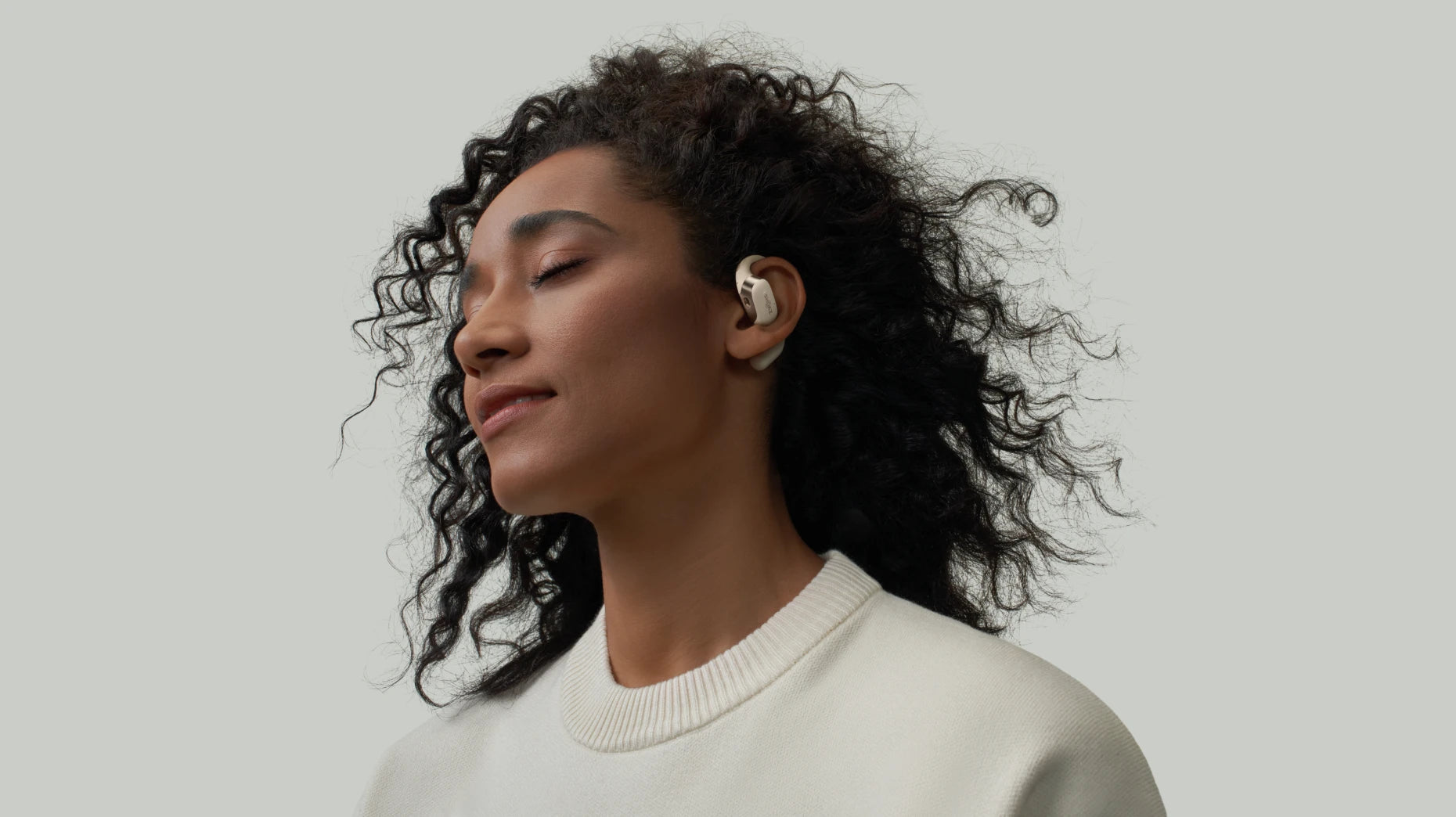
OpenDots One: OpenDots One is a clip-on, open-ear design. It intentionally doesn't block ambient sound. It natively supports Qi-certified charging, making power-ups effortless. At only 6.5g, this "feather-light" touch provides all-day, burden-free comfort. Its look is versatile for any activity.

OpenFit 2+: OpenFit 2+ keeps the classic Shokz open-ear design but adds Dolby Audio for a rich, immersive soundstage. You get a substantial 11 hours on one charge (up to 48 with the case). It supports Qi wireless charging, so just drop the case on a pad; it's always ready for your next adventure.

Electric Vehicles (EVs)
The EV transition is absolutely real, and this high-power charging is the obvious next step to solve "plug-in friction." Crucially, imagine the benefit during harsh Canadian winters, no more fumbling with thick, frozen charging cables outside when temperatures drop to -30 degrees. Beyond simple garage use, this technology is the foundation for future public applications, including specialized taxi queues or parking spots where vehicles charge dynamically without driver intervention.
Smart Home Devices and IoT Products
It's not just small sensors anymore. We are seeing furniture designed with integrated power: desks with embedded pads that silently power monitors and keyboards, or sophisticated lamps that can charge your devices from a short distance using Resonant technology. Kitchens are starting to integrate this too, allowing small countertop gadgets (like blenders or mixers) to power up without needing dedicated, exposed wall plugs. This is the future of truly seamless, invisible power, eliminating those ugly wall warts forever.
Is Wireless Charging Safe?
A common question is whether using magnetic fields to transfer power poses health or safety risks. The simple answer: Wireless charging is safe when using certified products.
EMF Exposure: Certified wireless chargers produce low-level, non-ionizing electromagnetic fields (EMF). These fields strictly comply with international safety standards and regulation, including those enforced by agencies such as the FCC (United States) and ISED (Canada). The magnetic fields are highly localized and drop off rapidly with distance. Conclusion: They pose no significant risk to human health during normal use.
Heat Management: Good-quality chargers include essential safety safeguards. They monitor temperature and will automatically stop or slow power if the device or pad overheats. They also include Foreign Object Detection (FOD). This immediately halts power if metal (like a coin) is on the pad, preventing dangerous heat buildup.
Final Command: Always purchase Qi-certified products from reputable brands to ensure complete safety.
FAQ
Do wireless chargers work when not plugged in?
No. Zero power. The wireless charger (transmitter) must be physically plugged into an outlet (or a battery bank). That physical connection is the only source drawing the electricity needed to power the coil and generate the magnetic field.
Can a wireless charger drain your phone battery?
No. A wireless charger cannot actively drain the battery. The modern Qi receiver circuitry is what controls power flow. The catch: If the phone aligns poorly, the constant charge cycle on/off plus the heat generated can make the phone use slightly more power than usual, causing fluctuations.
How long does wireless charging take?
It varies wildly. Time depends on the charger’s power output (5W, 7.5W, 15W, etc.) and the device's receiving capacity. Standard inductive charging is slower than high-wattage wired fast charging. Think about it: a 15W Qi wireless charger will be significantly faster than an older 5W pad on the same compatible device.
Are there any dangers to wireless charging?
If a piece of metal (coin, key, credit card) is placed between the pad and the device, it absorbs the energy and heats up dangerously, a major burn risk. All certified chargers include Foreign Object Detection (FOD) features to immediately shut down power when metal is sensed.
Is it okay to leave your phone on a wireless charger overnight?
Yes, absolutely fine. Modern chargers are smart. Once the phone hits 100%, the charger automatically stops (or sends a minimal trickle charge). This successfully prevents overcharging and minimizes heat, maintaining the battery's health.
Conclusion
Wireless charging uses different technologies grounded in physics, such as electromagnetic induction, magnetic resonance, and radio frequency, and honestly, it gives our mobile lives an incredible, unparalleled convenience. Think about it: From easily charging your phone or your favourite audio gear like the OpenFit 2+, right up to the massive future of electric vehicles, it’s all built on this simple, profound shift away from physical cables. Believe me, as the efficiency gets better and the standards lock in, wireless power isn't just integrated. It is going to become a truly indispensable part of everything we do.
Author Information

guides on Shokz
Related Posts