Bluetooth Range Explained: How Distance and Signal Strength Affect Your Connection
Bluetooth is the core wireless link for almost all our devices today. It handles everything from connecting headphones during a busy Canadian commute to linking complex Bluetooth Mesh smart home systems. Given this reliance, the biggest question is: What is the true, achievable Bluetooth range when you use it in the real world? The advertised maximum distance is often very different from the practical performance users experience across Canada. This guide will explain the key factors that affect your connection's stability. We will detail exactly how distance and environmental variables fundamentally influence signal quality and the overall reliability of your wireless devices.
How Does Bluetooth Work?
Bluetooth is defined as a globally recognized standard for short-range wireless communication, operating within the 2.4 GHz ISM radio band, a frequency shared with devices like Wi-Fi networks. Its fundamental purpose is to replace physical cables, enabling devices to communicate wirelessly over small, localized distances.
To keep the signal clear despite this congested environment, Bluetooth relies on Frequency Hopping Spread Spectrum (FHSS). The process is simple: instead of staying on one frequency, paired devices rapidly jump between 79 distinct frequencies thousands of times per second. This frequent switching minimizes signal collisions and prevents data loss.
When two devices pair, they formally create a secure, small network called a piconet. Within this network, the devices agree on a specific, shared hopping sequence. This synchronization ensures the link is stable, reliable, and private, allowing them to coordinate their communication and shield against outside interference.
How Far Does Bluetooth Reach?
The maximum range for Bluetooth is explicitly determined by its mandated power class. However, the measurable actual performance in complex environments like homes or offices, the real, practical range, is routinely and significantly shorter than this theoretical standard.
For establishing a common baseline, all Bluetooth devices are officially categorized into three principal classes, strictly based on their maximum allowed power output. The table below outlines these established classes, alongside their standard operating range under idealized and completely unobstructed conditions:
|
Bluetooth Class |
Maximum Transmit Power |
Standard Operating Range (Approximate) |
|
Class 1 |
100 mW (20 dBm) |
Up to 100 metres (330 feet) |
|
Class 2 |
2.5 mW (4 dBm) |
Up to 10 metres (33 feet) |
|
Class 3 |
1 mW (0 dBm) |
Up to 1 metre (3 feet) |
Most common personal electronics, like smartphones and the wireless headphones frequently used during a Canadian subway ride, fall into the Class 2 category. This means their maximum theoretical range is approximately 10 metres.
However, users often find their connection becomes spotty after moving just 5 or 6 metres, especially when indoors. This noticeable drop in performance is entirely due to unavoidable real-world factors: thick interior walls, large pieces of furniture, and competing wireless signals all absorb or reflect the radio waves necessary to maintain the Bluetooth range.
What Determines Bluetooth Range?
The true effective Bluetooth range is not a simple, fixed number. Instead, it is a dynamic variable influenced by a complex combination of physical, hardware, and technical factors. Understanding this interplay is essential for achieving more consistent and accurate Bluetooth ranging performance.
Environmental Factors
Physical Barriers/Obstructions: Walls made of dense materials like concrete or brick are major signal killers indoors. Large metallic objects and water (including human bodies) also absorb or reflect radio waves, often dramatically reducing the effective Bluetooth range over short distances.
Weather Conditions: While less significant for standard indoor consumer electronics, extreme weather or heavy precipitation can affect radio wave propagation. This concern primarily applies to robust Class 1 devices attempting to achieve maximum distance outdoors.
Competing Signals/Frequencies: Bluetooth operates in the highly congested 2.4 GHz band. Despite using Frequency Hopping Spread Spectrum (FHSS), chronic interference ("traffic congestion") forces the device to work harder to maintain the link, subsequently limiting its effective range and stability.
Device Factors
Hardware Quality: The performance hinges directly on the quality of internal hardware, specifically the radio transmitter and sensitive receiver. Simply put, premium, well-engineered hardware sustains a much more stable connection over significantly longer distances than devices built with components where corners were cut.
Bluetooth Version: When you look at upgrading, note that versions like Bluetooth 5.0 and all subsequent iterations bring critical advantages. They give users the flexibility to choose between dramatically higher data transfer rates or a notably extended Bluetooth range, benefits that older standards (like 4.0)simply couldn't deliver.
Antenna Gain: The antenna's efficiency and directionality are often the secret heroes of range performance. A smart antenna design expertly focuses the radio energy—this is what simultaneously boosts the transmission power and greatly improves the device's ultimate reception range.
Technical Parameters
Transmit Power: Defined by the Bluetooth Class, maximum power output is the primary determinant of potential range. Simply put, higher power ensures the signal travels farther before its strength decays below usable limits.
Receiver Sensitivity: This is the absolute minimum signal strength required for a device to reliably and accurately decode the incoming data. A device with higher sensitivity can "hear" a weaker signal from a greater distance, effectively extending the connection range.
Path Loss: This phenomenon refers to the inescapable reduction in signal strength as an electromagnetic wave propagates through space. Path loss is unavoidable in wireless communication and consistently increases with distance.
Battery & Usage Conditions
Battery Life: As batteries drain during use, some devices automatically reduce their maximum transmit power output to conserve energy. This necessary measure leads to an immediate and noticeable drop in the effective range.
Device Class: As previously detailed, all devices are engineered and manufactured for a specific power class (Class 1, 2, or 3). This foundational engineering decision sets an unchangeable hard ceiling on their maximum potential communication range.
Typical Applications of Bluetooth
The inherent versatility and reliability of Bluetooth make it a key connectivity backbone across modern technology, allowing devices such as connecting Bluetooth headphones to a PC to work seamlessly.
Wireless Audio Devices
The Wireless Audio Devices category is the most ubiquitous and instantly recognizable application of this protocol. Wireless audio technology imposes a critical dual requirement: a functional Bluetooth range and, more importantly, excellent connection stability for an uninterrupted, seamless listening experience.
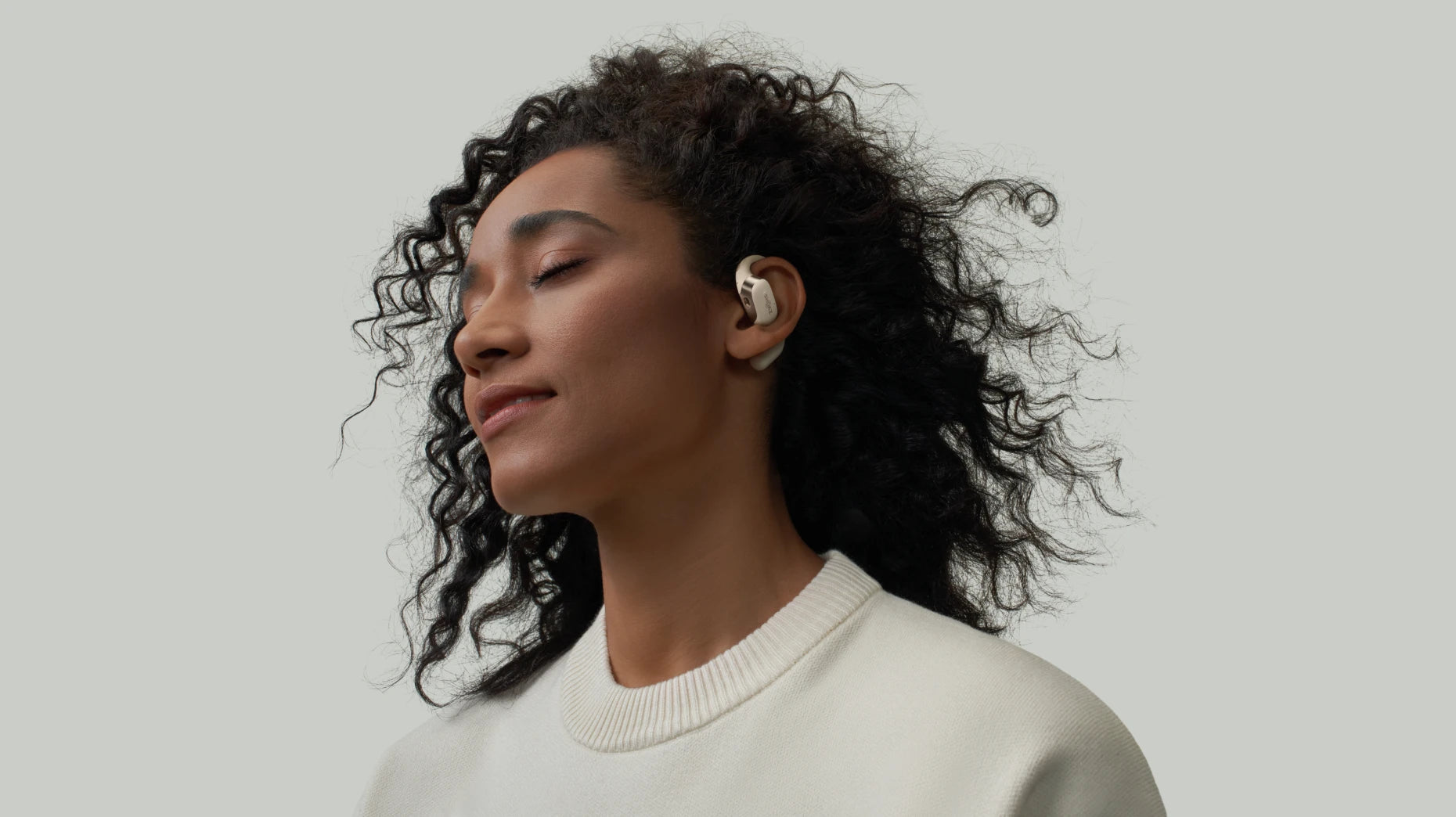
Consequently, maintaining consistent audio quality and reliable signal processing is paramount. Sophisticated consumers frequently choose Shokz earbuds, such as the OpenFit Air or OpenDots One, which are meticulously engineered to guarantee superior and highly reliable Bluetooth connections.
OpenFit Air
OpenFit Air is an advanced open-ear headset designed for comfortable all-day wear, blending ergonomic comfort with high-quality sound. It offers a secure, stable Bluetooth connection, an optimal range of 10 meters (33ft), ensuring seamless audio whether commuting or exercising outdoors. OpenFit Air also supports multipoint connection, making it easy to set up multipoint pairing and enabling easy switching of the active audio source between your smartphones, tablets, and laptops.

OpenDots One
OpenDots One features an innovative, highly lightweight, and secure ear-clip design, delivering powerful performance despite being small. It brings high-quality sound and a reliable, exceptionally stable Bluetooth connection. Fully supports multipoint pairing capabilities, allowing users to efficiently connect to two different devices simultaneously. This device is perfectly suited for a variety of listening scenarios, from daily commuting and intense sports to quiet listening at home.

Health & Fitness Equipment
Across the health and fitness technology spectrum (from heart rate monitors to smart scales), Bluetooth Low Energy (BLE) plays a critical role. BLE enables these specialized devices to quickly and efficiently sync large volumes of collected data directly to your smartphone. The primary design focus here is securing extremely low power consumption.
Smart Home Devices
Numerous modern smart home devices, including intelligent light bulbs and smart locks, often rely on the advanced architecture of Bluetooth Mesh networking, a system that effectively works as a Bluetooth repeater range extender. This sophisticated, collaborative structure allows individual devices to securely relay messages and data to one another.
Automotive Applications
Hands-free calling and integrated media streaming are standard, baseline features in virtually every modern vehicle. These essential applications inherently require only a very small, confined Bluetooth range (typically seat to dashboard). It is critically important that the resulting connection’s stability and reliability are exceptionally high for safe and continuous driver operation.
Industrial & IoT Applications
In large operational spaces, such as industrial warehouses or sprawling facilities, highly specialized Class 1 Bluetooth devices or dedicated proprietary Bluetooth range extender solutions are frequently deployed. These support mission-critical tasks like precise asset tracking, remote environmental monitoring.
FAQ
What is the maximum range of Bluetooth?
The maximum theoretical range depends on the device's power class. Class 1 devices can reach up to 100 metres. However, most consumer electronics are Class 2, typically offering a range of about 10 metres.
How far does Bluetooth 5.0 reach?
Bluetooth 5.0 introduced a Long Range mode for BLE, allowing it to decode weaker signals over greater distances. Under ideal conditions, the theoretical range can extend up to 240 metres or more. However, this increased range sacrifices speed and is significantly limited by walls and real-world interference.
Can Bluetooth signals go through walls?
Yes, but walls significantly reduce signal strength. Dense materials like concrete or brick will rapidly degrade the signal, cutting the usable range down to just a few metres or causing the connection to drop entirely.
Is Bluetooth 5.4 good for music?
Yes, Bluetooth 5.4 is excellent for music. It supports the newest audio standard, LE Audio (Low Energy Audio), which provides higher fidelity sound quality at lower power consumption. This means better audio and significantly longer battery life from your devices.
Conclusion
The most crucial takeaway point is that the Bluetooth range displayed on packaging represents only the maximum potential distance under ideal, controlled conditions. In reality, the user experience is a fraction of that, limited by physical walls, people, and wireless interference. For the most reliable connection, essential for time-sensitive data, always keep paired devices close and minimize obstacles. For long-distance needs, look for devices that feature Bluetooth 5.0 (or newer). Operating as Class 1 transmitters can also be a reliable choice.
Author Information

guides on Shokz
Related Posts