DTS Sound vs Dolby: Comparing Audio Quality and When to Choose One Over the Other
Deciding on a home theater layout or a new set of headphones requires a clear understanding of two competing audio standards. DTS and Dolby dominate the market, but the underlying engineering logic for each format varies at the file level. Examining the technical trade-offs of DTS sound vs Dolby is essential for matching audio software with specific hardware capabilities to achieve the best spatial results.
What Is DTS Sound?
Digital Theater Systems emerged in the early 1990s as a high-fidelity alternative to existing formats. The technology gained widespread recognition following its use in the theatrical release of Jurassic Park, which fundamentally changed the industry’s approach to cinema audio.
Key Features of DTS Sound
The defining characteristic of DTS is the use of higher bit rates. By applying less compression during the encoding process, the system allows more raw data to reach the output hardware. Additionally, it doesn't require specific speaker placement. It can automatically adjust and accurately reproduce the 3D sound field based on the existing speaker positions.
Benefits of DTS
The primary appeal of DTS lies in its perceived transparency. Because the encoding process preserves a larger portion of the original studio recording, the resulting texture often feels more authentic to the source. Also, its flexible setup requirements make it easier to adapt across different room sizes and speaker settings.
What Is Dolby?
Dolby established its industry presence through early innovations in noise reduction and surround sound development. The company currently maintains the broadest market reach in the audio sector, with its licensed technology integrated into environments ranging from commercial IMAX theater screens to mobile hardware.
Key Features of Dolby Digital
The technical foundation of Dolby rests on high-efficiency encoding and advanced metadata. These codecs are engineered to maintain high audio quality at lower bit rates, which explains why Dolby remains the primary standard for streaming platforms.
It also introduces a vertical dimension to the soundstage. This technology enables audio objects to be placed in a three-dimensional space, including overhead positions, which provides realism during complex scenes involving vertical movement.
Benefits of Dolby
The most significant benefit of the Dolby framework is near-universal compatibility. A vast majority of modern consumer electronics, including television sets, soundbars, and gaming consoles, feature native support for these formats. Its object-based audio also creates an immersive soundstage that feels natural and dynamic.
Key Differences between DTS Sound and Dolby
Immersive audio goals are shared, yet these remain two separate technical systems. Your choice of DTS sound vs Dolby Digital depends on your media source and your current living room hardware.
1. Principle and Technology
The compression philosophy creates the primary gap. Dolby uses complex algorithms to keep quality high at lower data speeds. DTS uses higher bit rates to avoid heavy data stripping. In a DTS vs Dolby 5.1 comparison, DTS hits a 1.5 Mbps ceiling, while Dolby Digital stays at 640 Kbps.
2. Sound Quality
Casual listeners might not hear a gap compared to traditional mono or stereo headphones. In a direct test, DTS often sounds louder with sharper high-end detail. Dolby is known for smooth 3D object placement. It creates a single acoustic environment instead of just sound coming from separate speakers.
3. Compatibility and Popularity
Dolby has the most market support. Small file sizes make it the standard for Netflix and digital TV. This efficiency also makes it the dominant format for mobile devices and wireless headphones, allowing users to experience cinematic spatial audio while commuting or watching TV late at night. DTS support is less common than Dolby Atmos on popular streaming services. Physical media is where DTS excels. Blu-ray and 4K UHD discs often use DTS-HD Master Audio for lossless, studio-quality sound.
4. Application Scenarios
-
Streaming: Dolby is the standard. Netflix and Amazon Prime use this ecosystem almost exclusively.
-
Physical Media: DTS is the enthusiast choice. High-end home theatre setups benefit from the high-bitrate tracks on discs.
-
Gaming: Both exist, but Dolby Atmos for Headphones is a common tool for gamers needing precise directional cues.
Comparison Chart
This DTS vs Dolby comparison table highlights the key differences above for a quick glance.
|
Feature |
Dolby Digital / Atmos |
DTS / DTS:X |
|
Compression |
More compressed (Efficient) |
Less compressed (Higher Bit Rate) |
|
Availability |
Streaming, Broadcast, Cinema |
Blu-ray, 4K Discs, Cinema |
|
Best For |
Consistency & Streaming |
Raw Detail & Physical Media |
|
Modern Version |
Dolby Atmos |
DTS:X |
How to Choose between DTS and Dolby for the Best Audio Experience
DTS or Dolby, selecting the right format depends on lifestyle integration rather than a simple quality ranking. Streaming-focused users will find their hardware often defaults to Dolby. Conversely, building a dedicated home theater requires a receiver capable of decoding both formats to ensure full compatibility with diverse media libraries.
1. Start with Your Audio Equipment and Setup
If you don’t have a complete speaker system, DTS will be your choice. DTS offers superior flexibility for unconventional room shapes where speaker placement is not symmetrical. In contrast, Dolby Atmos historically requires a specific configuration to render a complete 3D effect. However, when it comes to personal audio gear, Dolby is still a solid pick. These gears now bypass some of these physical hurdles by using software to simulate complex spatial signals.
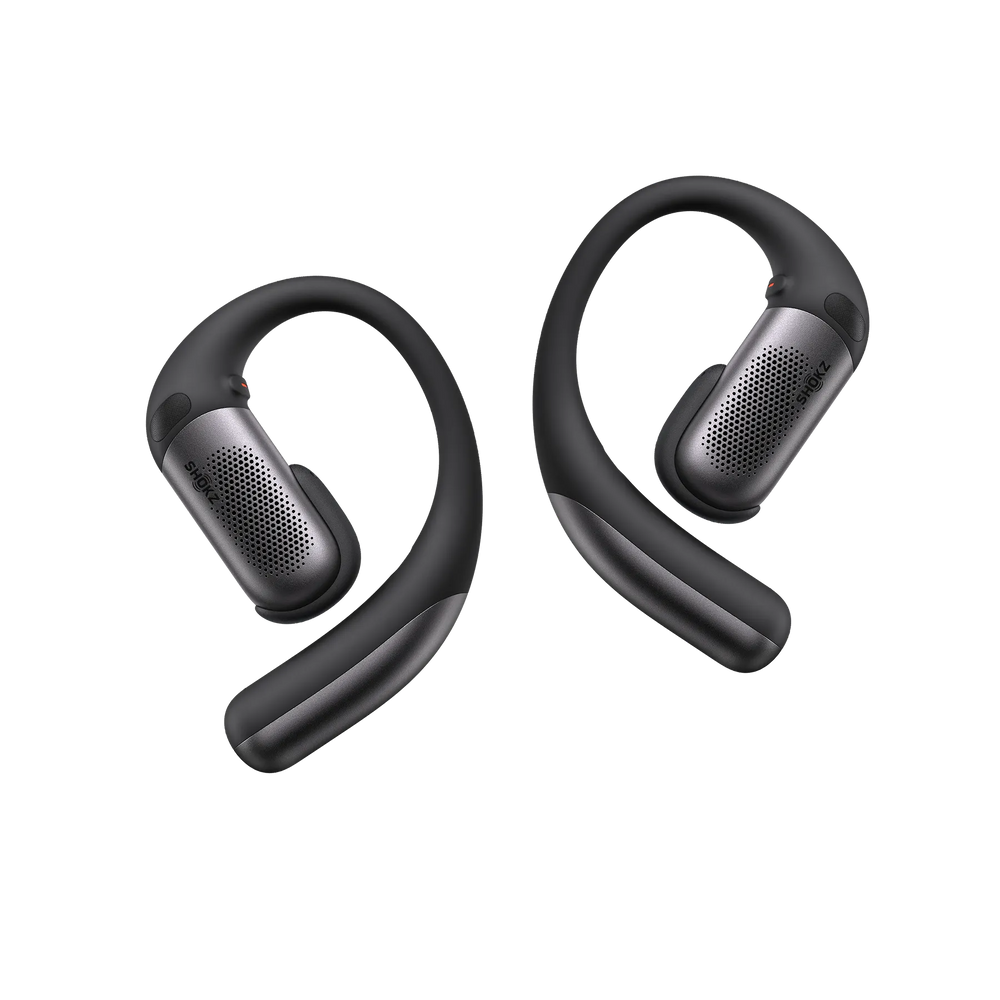
A specific example is the Shokz OpenFit Pro, which is optimized for Dolby Atmos. It utilizes integrated head-tracking technology to recreate 3D sound positions accurately. This hardware and software synergy simplifies the user experience while maintaining precise surround performance.
2. Determine Your Primary Use Case
Choosing between DTS and Dolby depends largely on how and where you plan to use the technology. If you are loading music on your daily commute, you will benefit from Dolby’s encoding efficiency, which uses less bandwidth. While purists focus on physical 4K discs typically lean toward DTS due to the higher raw data retention found on those tracks. Understand what they provide and just match your needs.
3. Evaluate the Content
Scanning movie cases or streaming app info tabs to see which format they support. The platform determines which version reaches the listener. The decision between Dolby Digital vs DTS is frequently pre-selected by the service provider.
4. Assess Your Budget
Dolby support is generally more accessible in entry-level hardware, with many budget soundbars featuring Atmos labels. In the mid-range category, both Dolby and DTS support is becoming more prevalent, with DTS:X often appearing in better AV receivers. It offers enhanced spatial features. At the high end, premium AV receivers and home theater systems include advanced DTS:X functionality alongside Dolby, but this level comes with a higher price tag.
5. Prioritize Sound Quality vs. Compatibility
From the perspective of sound quality, both provide lossless formats. DTS-HD MA or Dolby TrueHD on physical discs provides the highest possible quality. For those prioritizing a seamless connection across multiple devices, Dolby remains the more practical standard for universal compatibility.
FAQ
1. Is DTS still relevant in modern audio?
DTS remains a critical standard for the high-end physical media market. While Dolby leads in the streaming sector, DTS-HD Master Audio and DTS:X are the preferred choices for Blu-ray collectors and home theater enthusiasts. Its relevance is sustained by high bit rates and the ability to adapt to non-standard speaker layouts.
2. Does Netflix use Dolby or DTS?
Netflix uses Dolby Digital Plus and Atmos exclusively. The decision is driven by bit-rate efficiency. Dolby codecs maintain a stable soundstage even when web speeds drop, which is a requirement for global streaming apps that need to manage massive data loads across different networks.
3. What's better, 5.1 or DTS?
These are separate concepts. 5.1 defines the physical speaker count involving five main channels and a subwoofer. DTS is the digital technology used to encode the sound itself. In a standard 5.1 comparison, DTS often sounds more detailed because it allows for a 1.5 Mbps data stream.
4. Which sound mode is best for home theater?
Match the mode to the source file for the best results. For example, if you’re watching a movie mixed in Dolby Atmos, using the Atmos-enabled mode on your receiver will deliver the most immersive experience. Most modern hardware includes an auto-detection feature that bypasses manual selection to ensure the audio stays true to the original studio master.
5. Which audio format is best for Dolby Atmos?
Dolby Atmos travels via two primary containers. On physical discs, it uses Dolby TrueHD, which is a lossless format that preserves all original studio data. For streaming, it uses Dolby Digital Plus to maintain efficiency. TrueHD is technically the superior option as it avoids the data loss associated with heavy compression.
Conclusion
Determining a winner in the DTS sound vs Dolby debate is impossible since each format dominates a specific sector of the audio industry. Dolby serves as the primary standard for streaming and mobile convenience, supported by everything from professional theater hardware to personal open-ear headsets. Conversely, DTS retains its status as the preferred choice for physical media due to its emphasis on high-bitrate data retention. Aligning your hardware selection with your primary content source is the most effective way to guarantee a high-fidelity 3D audio experience, regardless of the specific codec in use.
Author Information

guides on Shokz
Related Posts