Clip-On vs. Ear-Hook Earbuds: Which Fit Style Actually Keeps Up When You're Drenched in Sweat?
If your earbuds creep loose mid-deadlift or pop out as you unrack a squat, generic "workout compatibility" claims mean very little. Lifting creates two specific failure modes: sudden displacement from explosive bracing, and grip loss caused by sweating. True form factor matters significantly more than a marketing label.
The failure points are predictable: you hinge down, brace hard, come upright fast, wipe sweat, and realize one side has shifted. Valsalva pressure, head-angle changes, and bar proximity create a harsher test than standard treadmill sessions. Neither style wins by default; it ultimately depends on whether your earbuds fail from movement or from moisture.
What “Clip-On” and “Ear-Hook” Actually Mean (And Why It Matters Before You Buy)
Many buyers lump these together because both avoid the deep in-ear feel. However, from a retention standpoint, they solve the problem in completely different ways. If you don't separate those mechanics, it is easy to buy the wrong style for your training routine.
Clip-On Design — The Concha Anchor Mechanic
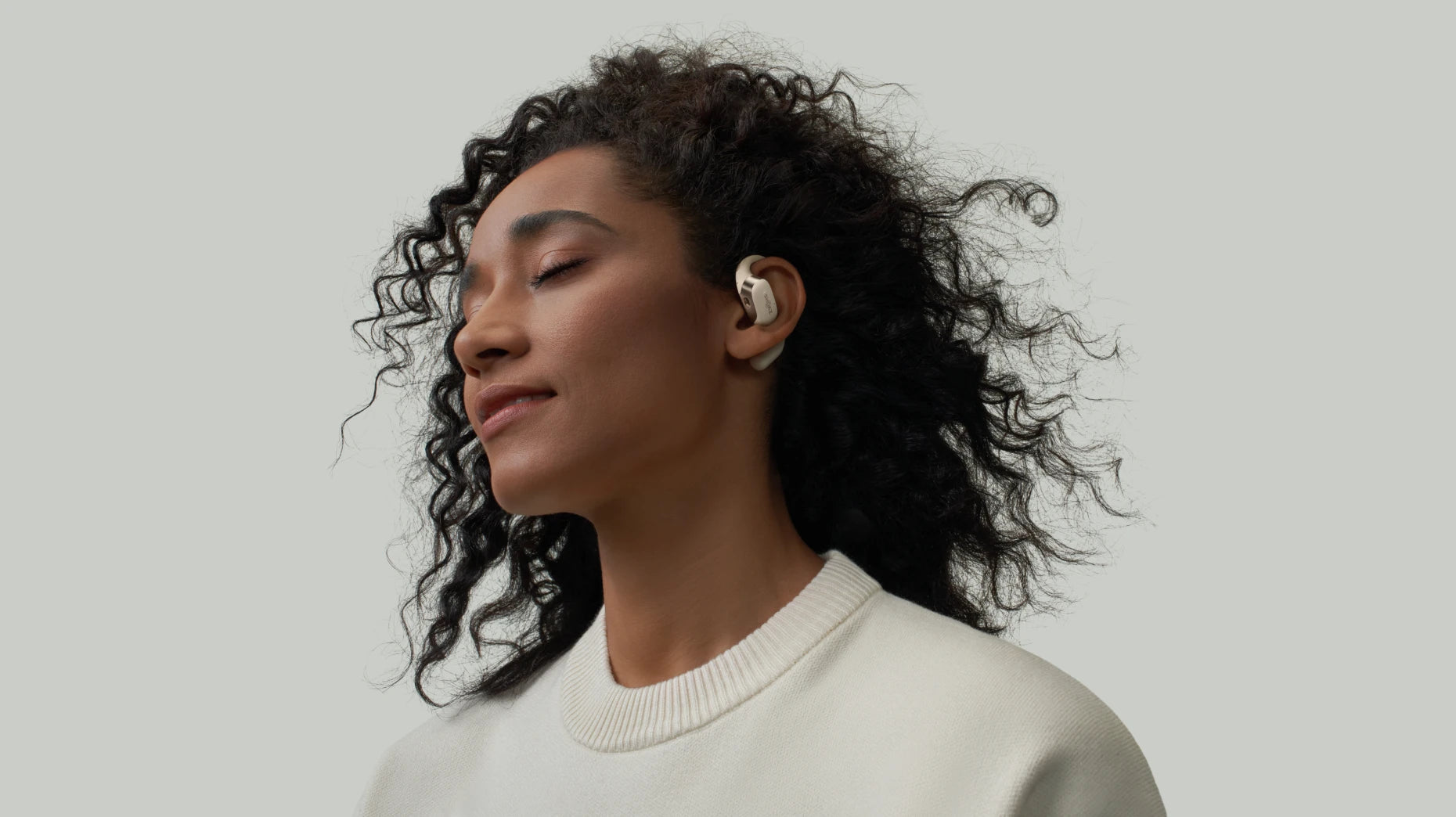
Clip-ons lock onto the firm outer edge of your ear bowl like a mini-clamp. Instead of hanging from the top, they rely on a consistent clamping force to hold steady during a heavy lift. This offers a clear gym advantage: because their security is less dependent on skin friction, heavy sweat is far less likely to compromise their grip.
Ear-Hook Design — The Pinna Wrap Mechanic
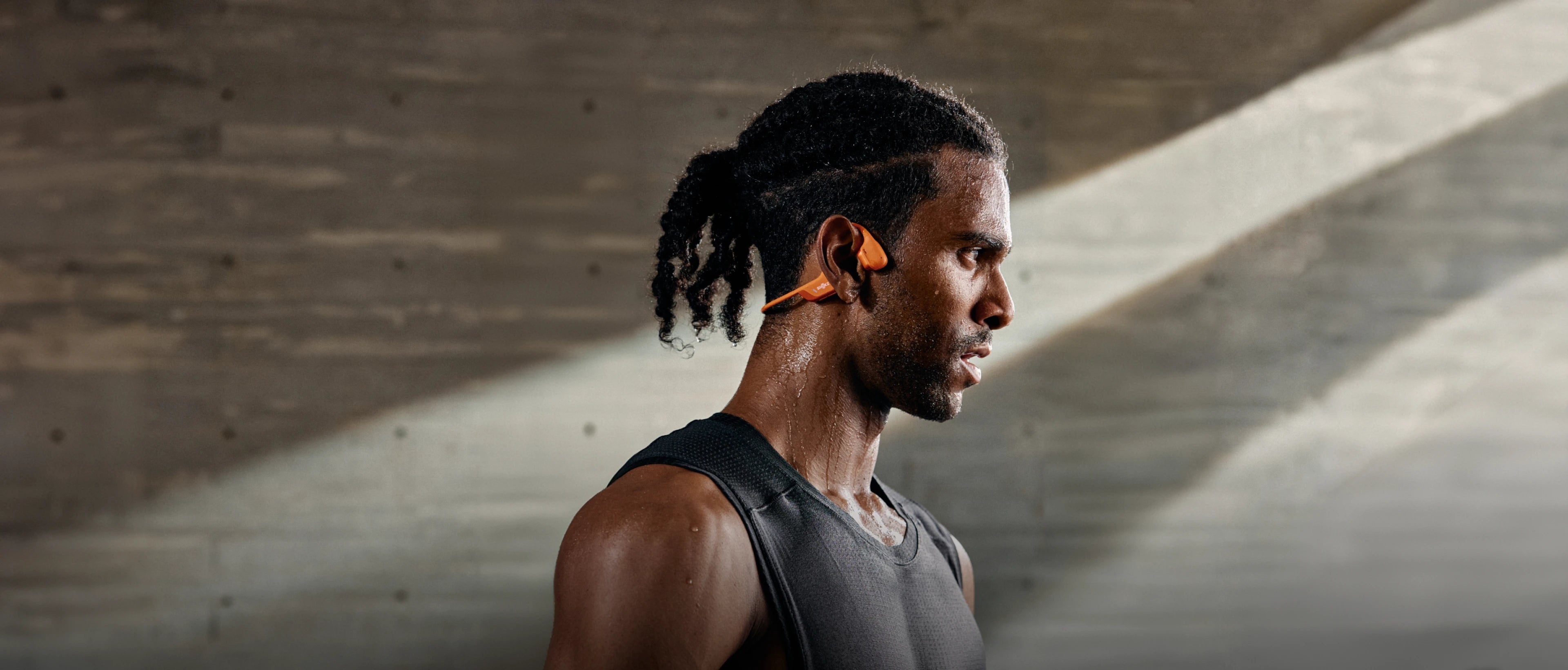
Ear-hooks use your ear's natural shape as a physical anchor rather than a tight clamp. While the loop keeps the earbud secured to your head, it still relies on surface friction for optimal alignment. Because the behind-the-ear crease naturally channels sweat, moisture reduces this grip, making the driver more prone to subtly shifting away from its sweet spot during heavy sets.
Stability Under Load — How Each Style Performs During Explosive, Heavy Movements
For an experienced lifter, this is the real buying question. Not “Are they good for workouts?” but “Will they still be in the right place after heavy sets of rows, presses, squats, and pulls?” Strength training exposes earbuds to forces that are more abrupt and less rhythmic than standard cardio.
The Four Movement-Specific Stability Stressors in Strength Training
Heavy lifting throws forces at your ears that generic "sports earbuds" often aren't built to handle. True gym stability gets tested in four specific moments:
-
The Head-Down Hinge: Deadlift setups and bent-over rows flip your head angle, letting gravity pull the earbuds straight forward and away from your ears.
-
The Valsalva Brace: Clenching your jaw and bracing hard changes your facial tension, which can subtly shift the shape of your ear area mid-rep.
-
Gear & Body Contact: High-bar squats, overhead presses, or high shirt collars can easily brush past your ears and snag the earbud housing.
-
Rapid Resets: Exploding from a deep hinge back to an upright position leaves almost no time for mid-set adjustments.
When these stressors hit, clip-on earbuds generally survive the downward pull thanks to their side-clamp grip. Ear-hooks handle standard upright gravity quite well at first, but their hold gets much more vulnerable once you introduce heavy sweat and rapid head movements.
Clip-On Stability Verdict for Heavy Compound Movements
For heavy compound blocks, clip-ons are usually the more reliable choice—especially if your current earbuds tend to slip later in a session. Because they clamp onto your ear bowl, they don't need friction from dry skin to hold steady during heavy deadlifts or rows.
Their main vulnerability is direct physical contact. If you wear a high collar or use a tight high-bar squat setup, the barbell can catch the outer housing and shift it. They are highly sweat-stable, but can be sensitive to side impacts.
Ear-Hook Stability Verdict for Heavy Compound Movements
Ear-hooks usually feel rock-solid at the start of a session, making them great for overhead presses, pull-downs, and vertical machine work. The loop maps your ear anatomy naturally, which feels highly reassuring early on.
The issue is that their grip can degrade over time. Once sweat blankets the skin behind your ear, the hook loses its primary traction point. They might not fall out completely, but the fit often gets "soft" or loose, forcing annoying mid-set adjustments.
Stability by Movement Type
| Movement Type | Clip-On | Ear-Hook |
| Deadlift setup | Stable | Conditional |
| Overhead press | Stable | Stable |
| High-bar squat | Conditional | Conditional |
| Bent-over row | Stable | Conditional |
| Clean & jerk | Conditional | High Risk |
Sweat Resistance — How Each Style Holds Up Under Prolonged Moisture Exposure
Sweat creates two distinct battles during a heavy session: it threatens your earbud's physical grip in the moment, and it risks damaging the internal electronics over time.
Sweat Accumulation Mechanics — Where Moisture Pools by Design
Ear-hooks wrap directly around the crease behind your ear, which acts as a natural drainage channel for scalp and temple sweat. Once moisture pools in that groove, the hook loses the friction it needs and can start to slide.
Clip-ons get wet too, but the outer ear bowl rarely transforms into a slippery runway in the same way. Because their contact zone is less exposed to major sweat trails, clip-ons offer heavy sweaters a much more consistent hold as the workout heats up.
IP Ratings — What Sweat Protection Actually Means for Gym Use
Try not to fall into the IP rating trap by assuming a higher number automatically means a tighter fit. A spec like IP55 simply means the internal electronics have better sealing against long-term sweat corrosion than IP54.
While that helps keep the hardware alive over months of training, it has no direct impact on fit retention. A high rating won't stop a wet earbud from sliding out once the skin gets slick. The practical question isn't which number is higher, but whether the earbud's physical shape can handle where that sweat actually pools.
Comfort and Fit Fatigue Over a Full Training Session
A pair that stays put but becomes irritating by minute 45 is not a great gym investment. Long-session comfort matters immensely for people doing full strength blocks, accessories, and cardio finishers in one go.
Clip-On Comfort Profile — Cartilage Pressure and Long-Session Wear
Clip-ons create pressure on the cartilage by design. If the tension is well-judged, that pressure fades into the background. If it is too aggressive, you may start noticing it later in the session as a mild hot spot or soreness. This is especially true for narrower pinch-style clips.
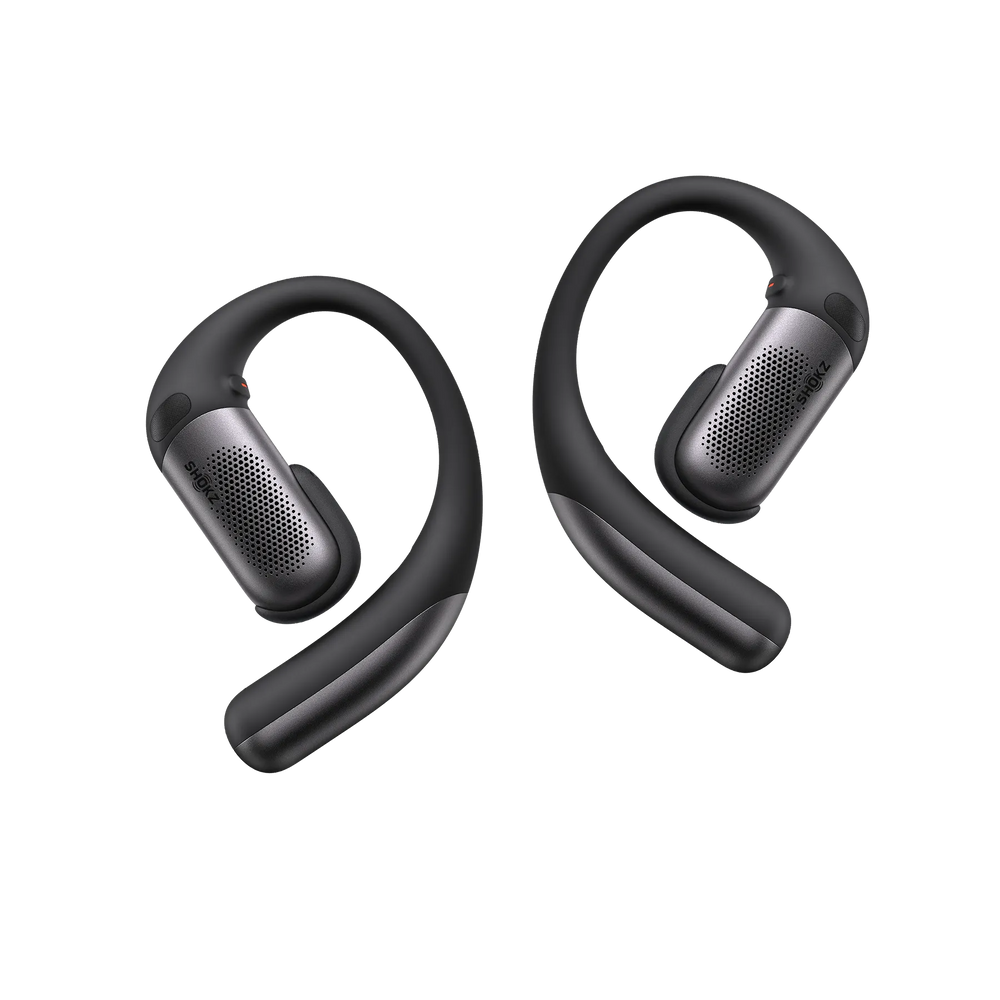
Lighter designs help prevent this. At just 6.5g per earbud, models like the Shokz OpenDots ONE use a flexible nickel-titanium core to deliver smooth, balanced tension instead of a harsh pinch, helping to keep your ears fatigue-free during marathon sessions.

Ear-Hook Comfort Profile — Hook Weight and Post-Auricular Pressure
Ear-hooks usually feel gentler at first because they do not clamp cartilage in the same way. For moderate training and shorter sessions, many people find them easier to forget. However, over a 60- to 90-minute workout, the pressure point behind the ear can become noticeable, especially once sweat causes the hook to shift and settle repeatedly.
Premium designs mitigate this issue. Devices like the Shokz OpenFit Pro use an ergonomic silicone hook to evenly distribute their 12.3g weight, minimizing behind-the-ear hot spots so you stay comfortable well past the hour mark.
Durability and Build Quality for Repeated High-Sweat Gym Use
The longer-term question is not just whether the earbuds survive sweat electronically. It is whether the retention system still works properly after months of being pulled on, wiped down, and worn through demanding sessions.
Material and Hinge Vulnerability by Form Factor
Clip-on models rely on a hinge or core band that flexes every time you put them on. This constant bending creates a natural mechanical stress point. When heavy sweat works its way into that moving mechanism, the combination of friction and moisture can quickly cause corrosion if the internal materials aren't built to withstand it.
Ear-hook models typically wear out at the exact transition point where the soft loop meets the rigid main housing. This junction takes on subtle bending with every head movement, and prolonged sweat pooling in that area can slowly degrade the materials, particularly in lower-grade plastics.
For repeated high-sweat lifting, the better durability bet depends heavily on build execution. In broad form-factor terms: clip-ons ask more from a spring mechanism, while ear-hooks ask more from a flex arm.
Verdict — Which Style Fits Which Lifter (The If-Then Decision Framework)
If your earbuds become frustrating because they slowly get slick and start shifting as sweat builds, clip-ons are generally the cleaner answer. If they fail because you prefer a lighter-pressure feel and your sweat output is moderate, ear-hooks remain a solid option.
The If-Then Recommendation Matrix
| If Your Priority Is… | Then Choose… | Because… |
| Maximum stability across all compound lifts, session start to finish | Clip-On Earbuds | Concha anchor is not degraded by sweat saturation; consistent grip throughout the session. |
| Strong stability for vertical pressing/pulling with lighter sweat output | Ear-Hook | Pinna-wrap provides a reliable positional hold when the skin behind the ear stays relatively dry. |
| Sessions longer than 60 minutes with heavy, continuous sweating | Clip-On Earbuds | Sweat pooling in the crease behind the ear degrades ear-hook grip before the session ends; clip-on contact zones are less exposed. |
| Comfort over extended sessions with moderate movement load | Lightweight Ear-Hook | Lower clamping pressure than clip-ons; acceptable stability when sweat is managed. |
| Open-ear awareness in a commercial gym (coach cues, ambient safety) | Either (prioritize open-ear drivers) | Both styles can offer ambient awareness; this is a driver placement decision, not a form-factor decision. |
The One Question to Ask Before You Buy
Ask yourself this: Do your current earbuds fail because movement knocks them loose, or because sweat makes them slip after 30 minutes?
If movement is the main issue, closely examine retention strength and overall shape in either category. If sweat is the main issue, a clip-on design is usually the more direct solution. For the pragmatic lifter who has already lost patience with mid-session adjustments, that is the most helpful bottom line.
Author Information

guides on Shokz
Related Posts