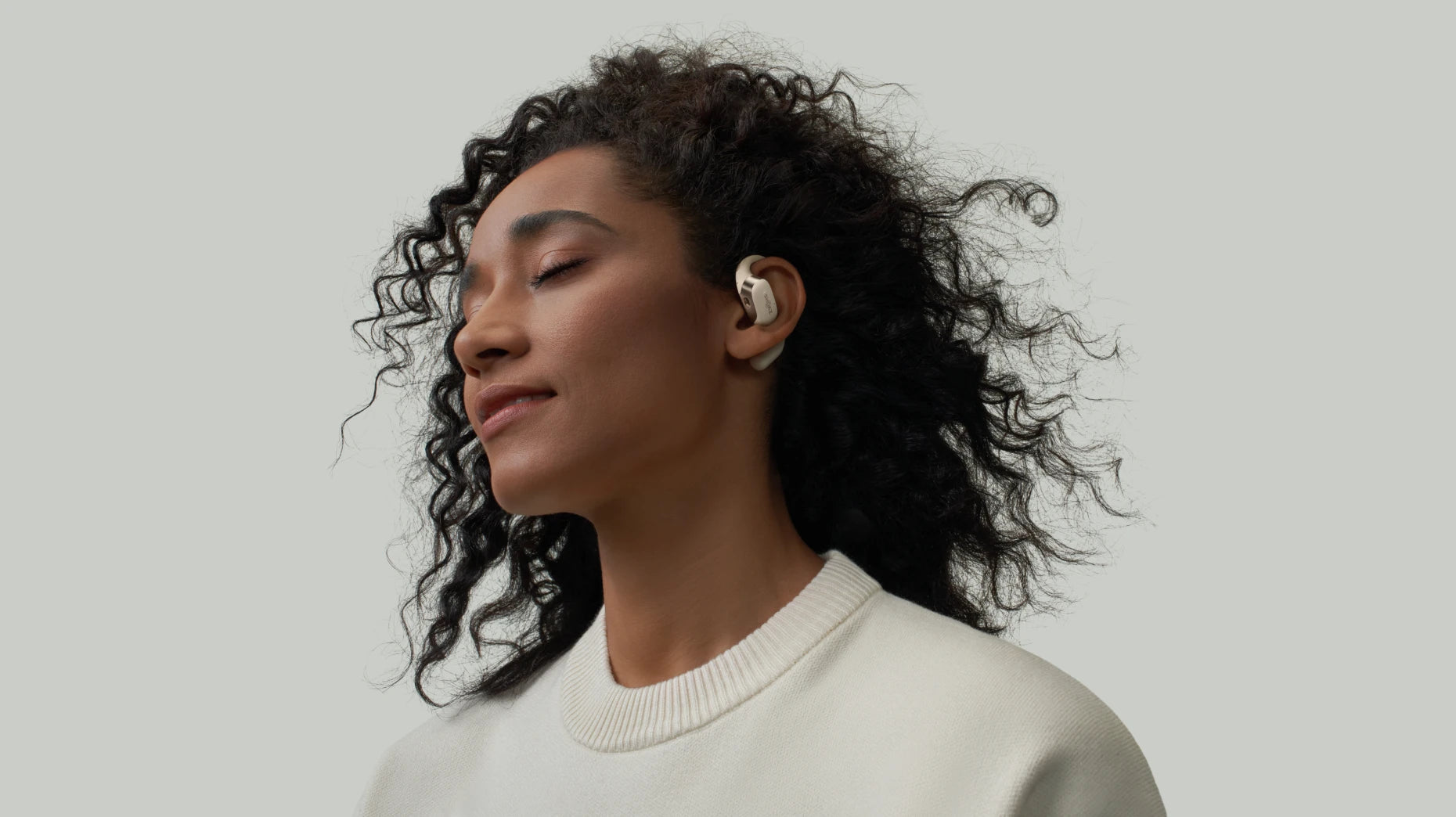
Are Bone Conduction Headphones Comfortable and Secure Enough for the Gym?
Moving between cardio, strength training, and stretching can highlight some of the limitations of traditional earbuds, which may shift as sweat builds up. Because bone conduction headphones sit around the back of the head with a flexible neckband and ear hooks rather than relying on friction inside the ear canal, they distribute contact across the head and stay anchored during movement.
This design can make bone conduction headphones a comfortable and secure option for gym workouts, particularly for people who want a stable, open-ear fit during dynamic movements. To see how this design works in everyday workouts, it helps to look at how they handle specific activities such as squats, HIIT, and faster-paced exercises.
Do Bone Conduction Headphones Stay Secure During Gym Workouts?
The physical design of bone conduction headphones can help keep them in place during active movement. Instead of relying on a tight seal inside the ear canal, they distribute contact around the head with a lightweight neckband and ear-hook structure.
This difference in design can affect how they feel across different types of training:
| Workout Type | Fit & Stability Challenge | Real-World Performance & Feedback |
|---|---|---|
|
HIIT & Cardio (Burpees, jumps, intervals) |
Rapid vertical movements and repeated impacts can cause traditional earbuds to shift. | The frame is designed to stay anchored during movement. One user noted that they did not slip during intense jump exercises and were barely noticeable while working out. |
|
Rowing & Core Work (Ellipticals, sit-ups, mats) |
Frequent changes in head position and contact with benches or mats can cause headphones to shift. | The neckband helps keep the headphones in position and can accommodate horizontal positions and repeated movement. |
|
Strength Training (Squats, heavy lifts, supersets) |
Sweat can make ear canals feel slick, which may lead to more frequent adjustments. | External positioning can make minor adjustments quick and straightforward if the headphones shift during a set. |
Why the Wraparound Frame Typically Feels More Secure
Traditional earbuds often rely on friction and the fit of the ear tip inside the ear canal to stay in place. As sweat builds up or jaw movement changes during intense exercise, that fit can shift and require adjustment.
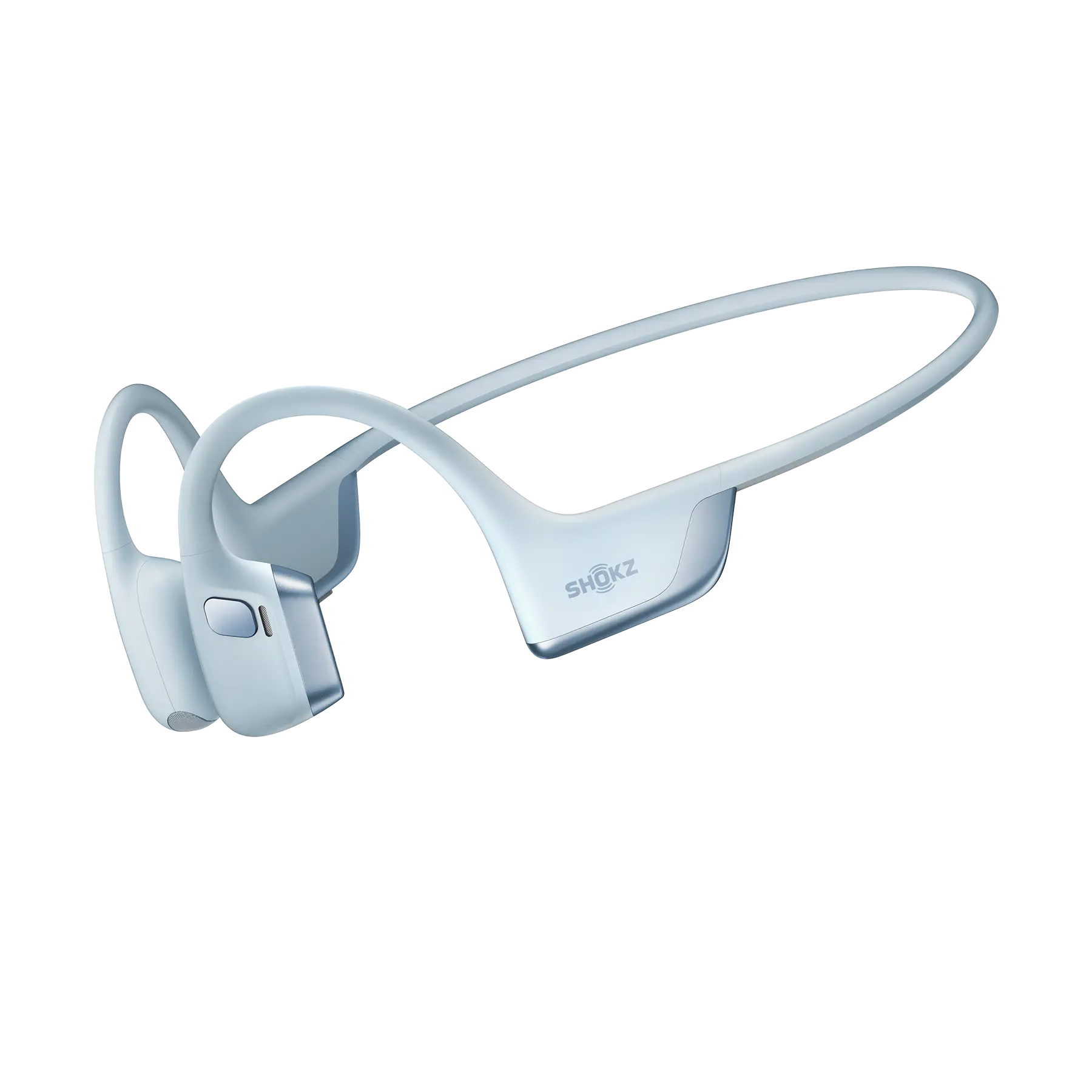
Bone conduction headphones sit outside the ear canal. By hooking over the ears and resting around the back of the head, they use an external frame to maintain their position. This means the fit is less dependent on contact inside the ear canal and may feel more consistent during a workout.
Do Bone Conduction Headphones Stay Comfortable During Gym Workouts?
When you first put on bone conduction headphones, they can feel quite different from traditional earbuds. But comfort can change throughout a workout. As you sweat, lift, and increase your effort, the way the headset feels against your skin and around your head can also change.
Here is how that comfort experience can unfold from warm-up to final stretch:
Phase 1: The Warm-Up (Low Pressure & High Breathability)
- The Mechanism: The transducers rest gently on the cheekbones in front of the ears, leaving the ear canals open. There is no silicone tip sitting inside the ear canal or creating an airtight seal.
- How it Feels: Light, open, and relatively unobtrusive. You avoid the enclosed feeling and ear-canal warmth that can build up with in-ear earbuds during indoor workouts.
Phase 2: Mid-Workout Heat (Sweat Meets Silicone)
- The Mechanism: As your heart rate increases, sweat and skin oils can build up around the headphone contact areas on your temples and behind your ears.
- How it Feels: While the frame helps keep the headset in position, moisture can make the contact areas more noticeable. You may go from barely noticing the headphones to becoming more aware of the pads against your skin as the workout continues.
Phase 3: High-Exertion Peaks (Muscle Flexing & Clamping Force)
- The Mechanism: Clenching your teeth during a heavy lift or pushing through a hard sprint can increase jaw tension and facial muscle activity.
- How it Feels: During intense efforts, some people may notice the frame feeling slightly tighter around the head. At higher volume levels, you may also notice more of the physical vibration against your cheekbones.
Phase 4: Post-Workout (Less Inner-Ear Fatigue)
- The Mechanism: Once your workout is over and you remove the headset, the contact pressure is released as your skin cools down.
- How it Feels: Because nothing sits inside the ear canal, you avoid the irritation or soreness that some people experience from wearing sweaty earbud tips for an extended period. Any mild pressure around the temples or ears should also ease once the headset is removed.
For some users, avoiding the enclosed feeling of in-ear earbuds may make external pressure easier to manage during longer workouts. However, if you are particularly sensitive to pressure around your temples or behind your ears, you may need some time to get used to the external frame.
Sweat and Long Sessions with Bone Conduction Headphones
Sweat is a common test for gym gear. While a headset may feel secure during a dry warm-up, an intense workout introduces moisture that can affect how traditional audio designs fit.
The Impact of Sweat on Stability
Traditional earbuds may shift during a workout because sweat can reduce friction between the ear tips and skin. Bone conduction headphones approach this differently. Since their stability comes from an external wraparound frame rather than a fit inside the ear canal, moisture may have less effect on how they stay in place. This can be useful during high-sweat cardio sessions or strength-training sets.
Comfort Over 60 to 90 Minutes
During longer, sweaty sessions, the comfort trade-off can become more noticeable. You avoid the enclosed feeling of sweaty earbuds, but after an hour or more of continuous wear, the frame may create some pressure around the temples or ears.
Managing Adjustments with Wet Hands
Mid-workout adjustments can also be relatively straightforward. Moving an external frame back into position with damp hands may be easier than trying to reinsert a small, slippery earbud. This allows for quick corrections between sets without having to handle small ear tips.
Dedicated options such as the Shokz OpenRun Pro 2 are designed around these considerations. Its physical buttons make it easier to control playback or adjust settings during a workout, while its DualPitch technology combines bone conduction and air conduction drivers for its audio design.
Bone Conduction Headphones with Glasses, Hats, and the Open-Ear Experience
Choosing workout gear often comes down to how well it works with the rest of your usual kit, including glasses, hats, or headbands. Because bone conduction headphones sit outside the ear canal, their interaction with accessories and their overall feel can differ from traditional earbuds.
The table below breaks down how this design interacts with common gym gear and environmental factors:
| Factor | Practical Gym Impact & Fit Considerations |
|---|---|
| Wearing Glasses | Both the headphone hooks and glasses arms occupy space around the ears. This can create a more layered feeling, although it may be manageable depending on the thickness and shape of your frames. |
| Hats & Headbands | Caps, headbands, or different hair volumes can slightly change where the flexible rear neckband sits. Depending on the style, a hat may help keep the fit in place or cause the band to sit slightly lower on the neck. |
| Situational Awareness | Leaving the ear canal open allows you to hear coaches, gym announcements, and nearby equipment while listening to audio, helping you stay connected to what is happening around you. |
| Sensory Comfort | Keeping the ear canal open can reduce trapped heat and the internal pressure associated with sealed ear tips. This open design may feel more breathable and less intrusive during longer indoor workouts. |
Quick Recap: Are They the Right Choice for You?
If you are weighing your options before your next workout, here is a straightforward breakdown of the key takeaways:
- Will they fall off? The wraparound design is intended to keep the headphones anchored during dynamic and strength-based movements, although fit can vary from person to person.
- Will they become uncomfortable? You may notice some frame pressure during longer sessions, particularly if you are sensitive to pressure around your temples or ears.
- Who are they best for? Gym-goers who sweat heavily, regularly do HIIT or strength training, and prefer to avoid the enclosed feeling of in-ear earbuds may find this style worth considering.
- Who should skip them? They may not be the right fit for people who are particularly sensitive to physical pressure around the temples or who prioritize a stronger bass-focused listening experience over an open-ear design.
Conclusion
So, are bone conduction headphones for gym workouts comfortable and secure enough? For many lifters and runners, they can provide a stable fit without putting anything inside the ear canal. You may notice some frame pressure during longer sessions, but the external fit can reduce the need for repeated adjustments when sweat and movement become factors. If you are tired of adjusting in-ear earbuds during workouts, an open-ear design may be worth trying for your next session.
Author Information

guides on Shokz
Related Posts