It looks like you are visiting the United States of America website from Canada. Since we don't
ship orders from United States of America to Canada, please visit your local Shokz website.
Best Noise Reducing Headphones for Sleep in 2026: Comfort Picks & Tips
12 min
When people look for noise reducing headphones for sleep, it usually comes down to one thing—nighttime noise that you can’t really control. Traffic outside, a partner who snores, or just a home that never feels completely quiet.
At that point, you’re not really thinking about sound quality or features. You just want something that helps you fall asleep without getting pulled back into every little sound around you.
That’s why noise cancelling headphones often come to mind first. It feels logical: if noise is the problem, cancelling it should fix it.
But sleep doesn’t behave like commuting or working. You’re not still. You’re not alert. And you’re not in control of how long you’ll be wearing them.
Why Not Just Use Noise Cancelling Headphones for Sleeping?
Noise cancelling headphones are built for situations where you’re awake and stationary—on a flight, on a train, or at your desk. You can take them off anytime. You can adjust them if they feel off.
Sleep removes all of that. Once you’re asleep, you’re no longer managing the device. And that’s usually when small discomforts start to matter.
Most noise cancelling headphones also rely on sealing the ear or pressing around it to block sound. That’s fine for short sessions, but over hours it becomes something you constantly notice.
People don’t always wake up because of noise. Sometimes it’s just the feeling of the headphones that gets uncomfortable enough to break sleep.
Side sleeping makes this worse. Over-ear headphones get pushed into the pillow. In-ear ones can feel tight or start to shift. Even if they reduce noise, they don’t always stay comfortable through the night.
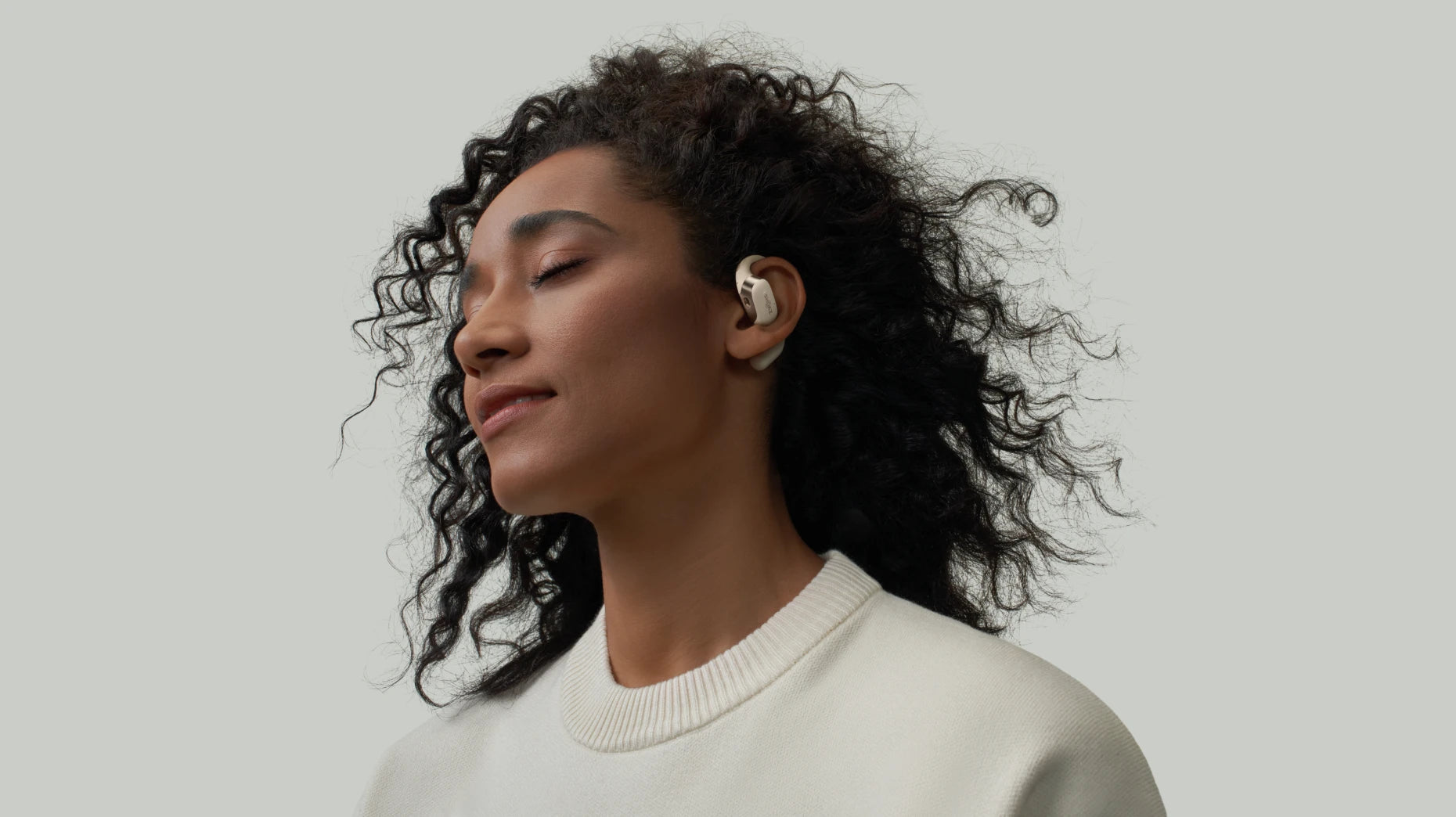
Shokz OpenFit Pro takes a different direction. Instead of trying to block everything out, it stays comfortable for long periods, which makes it easier to fall asleep without being constantly aware of the headphones.
It uses an open-ear design, so nothing goes into the ear canal. That alone removes a lot of the pressure and “plugged” feeling people usually struggle with at night.
Why OpenFit Pro Works Better in Real Sleep Situations
The difference shows up after you actually lie down and stop thinking about the headphones.
In sleep, even small pressure points don’t stay small. After a while, you start noticing them more, especially when you turn or shift in bed.
BecauseOpenFit Pro doesn’t sit inside the ear or seal it, there’s nothing gradually pressing or building discomfort through the night. For a lot of people, that’s the reason they can actually keep it on.
Instead of trying to fully block noise, it works better with low-volume background sound—things like white noise, rain, or soft ambient audio.
OpenFit Pro doesn’t make things silent. It just makes sudden sounds feel less sharp, because your brain isn’t going from total quiet to interruption every time something happens.
It also doesn’t move around much. Sleep isn’t still, and anything that needs frequent adjustment usually ends up being taken off at some point. OpenFit Pro avoids that problem by staying light and out of the way.
What OpenFit Pro is NOT
It’s probably just as important to be clear about what it doesn’t do.
It’s not noise cancelling. It won’t cut out loud traffic or a heavy snore next to you.
And it’s not meant to fully isolate you from your surroundings either. That’s not what it’s designed for.
It’s closer to something you can comfortably keep on while you fall asleep, rather than something trying to shut the world out completely.
How to Use OpenFit Pro for Sleep
Most people don’t really “listen” with it at night. It’s more like background audio.
White noise, rain sounds, or very soft music tend to work better than anything engaging. The point isn’t focus—it’s consistency in the background.
A sleep timer helps too. Something like 30 to 60 minutes is usually enough so it doesn’t keep playing all night.
After a while, your brain also starts to link that kind of sound with sleep. It becomes part of the routine, not something you actively think about anymore.
FAQs of Noise Reduction Headphones for Sleep
Does OpenFit Pro fully block noise? No. It doesn’t block noise completely. It just makes it less noticeable with comfort and low-volume background sound.
Is OpenFit Pro better than noise cancelling headphones for sleep? For many people, yes. Not because it blocks more noise, but because it’s easier to actually keep wearing through the night.
Can OpenFit Pro block snoring or loud environments? Not fully. But it can take the edge off when paired with background sound.
Can I wear OpenFit Pro all night? Some people do, but it’s usually most helpful when you’re falling asleep and in lighter sleep stages.
Conclusion
Noise reducing headphones for sleep aren’t really about achieving silence. They’re about making it easier to ignore the things you can’t control, without creating new discomfort in the process.
Noise cancelling headphones focus on blocking sound, but sleep isn’t just about sound—it’s about whether something stays comfortable long enough to forget you’re wearing it.
Shokz OpenFit Pro works in that gap. It doesn’t try to shut everything out. It just makes it easier to stay settled, so external noise matters a little less when you’re trying to fall asleep.
Author Information
NIKI Jane
NIKI Jane is a writer for Shokz. When not creating content, she’s usually out with her OpenRun Pro 2—cycling, hiking, and running wherever the road takes her.